
Booking a hotel at 1 a.m. because the price might change by morning? We’ve all been there. This Booking.com Reviews guide exists so you don’t have to gamble on that decision blind. We dug into the company’s real history, its actual safety record, and what verified customers say after the trip is over, not just before they hit “Reserve.” No filler, no invented statistics. Just a clear, honest look at whether Booking.com earns your trust in 2026.
Table of Contents
What Is Booking.com? A Quick Background Check
Booking.com didn’t start as a global giant. It began in 1996 in Amsterdam as a small site called Bookings.nl, founded by Geert-Jan Bruinsma, a university student who noticed he couldn’t book a Dutch hotel room online the way he could with Hilton in the United States.
In 2000, Bookings.nl merged with a competitor called Bookings Online, and the combined company took the name we know today: Booking.com. Five years later, in 2005, Priceline Group, now Booking Holdings (NASDAQ: BKNG), acquired the company for roughly $133 million, a deal that ended up funding two decades of global expansion.
Booking.com now operates out of Amsterdam and lists close to 3.4 million properties worldwide, including around 475,000 hotels, motels, and resorts, plus millions of homes and apartments across more than 220 countries. It also sells flights in dozens of markets, making it one of the few sites where booking com flights and hotel packages live under the same roof.
Is Booking.com Safe and Legit?
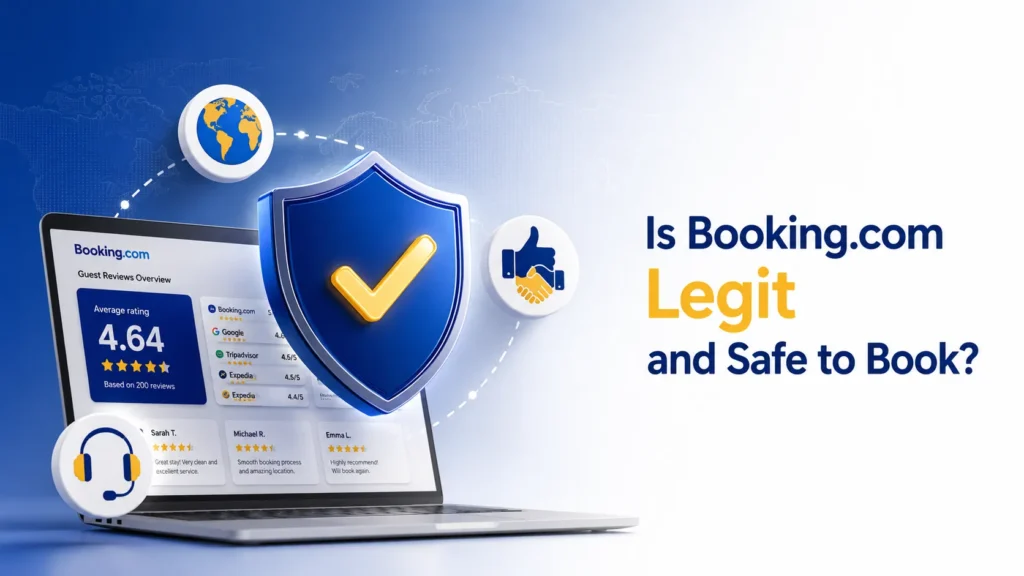
Short answer: yes, it’s a legitimate, publicly traceable company, not a fly-by-night operator. Booking.com is the flagship brand of Booking Holdings, a Fortune 500 company that answers to the SEC and to shareholders. That corporate structure alone rules out the idea that this is some kind of scam front.
Longer answer: legit doesn’t mean problem-free. Independent review data tells a more complicated story, and a fair Booking.com Reviews roundup has to include the uncomfortable parts along with the reassuring ones.
Is Booking.com 100% Safe?
No platform this size can honestly claim 100 percent safety, and Booking.com is no exception. The website itself uses standard encryption for payments, but the bigger risk usually comes from third-party hosts, fake listings, or scam messages that impersonate the platform rather than a flaw in Booking.com’s own systems.
Is Booking.com Safe for Credit Cards?
Yes, in the sense that its checkout uses industry-standard encryption through payment processors like Adyen. Paying by credit card also gives you a chargeback option, which matters more than people realize, since it becomes your safety net if a refund dispute drags on.
The Booking.com Scam You Should Know About
Here’s a fact worth knowing before your next trip. Cybersecurity researchers at Gen, the parent company of AVG, reported that Booking-related fraud complaints jumped sharply in 2024, and in early 2026 they flagged a new scheme researchers nicknamed a reservation hijack.
In that scheme, attackers gained access to a third-party hotel management tool through phishing emails sent to hotel staff. Once inside, they pulled real guest details from legitimate confirmed reservations and used that information to send convincing fake messages through WhatsApp, email, and text, asking guests to “revalidate” a card or payment.
The lesson isn’t that Booking.com itself got hacked. It’s that scammers increasingly target the wider hotel booking ecosystem, and a message that looks official can still be fake. If you ever get an unexpected payment request tied to a reservation, log into your Booking.com account directly instead of clicking any link in the message.
How Booking.com Works for Hotels, Motels, and Flights
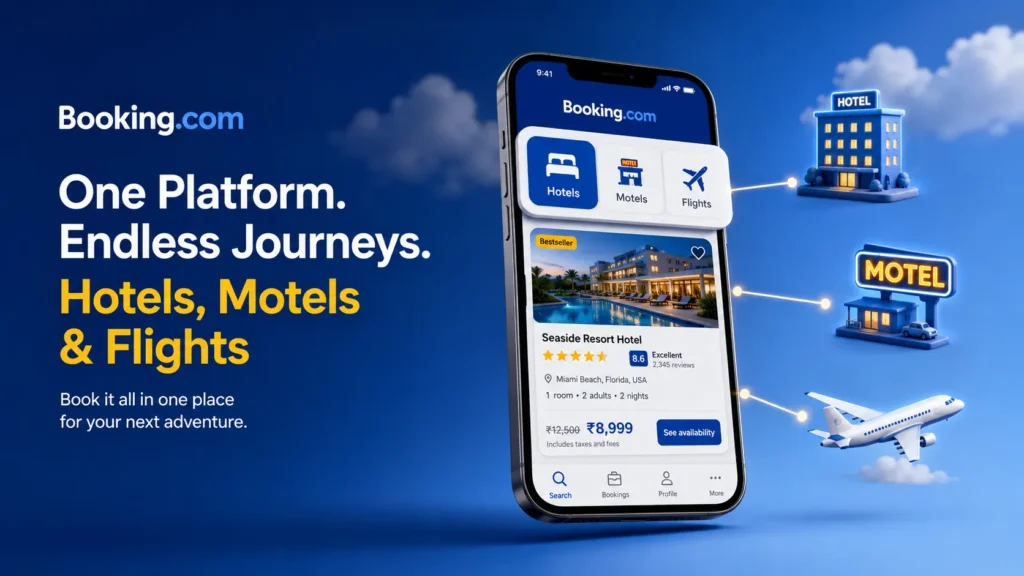
Searching booking com hotels follows a familiar routine: enter your destination, pick your dates, and filter by price, star rating, or guest score. Booking.com’s map view and filter system are genuinely well built, which is part of why the platform remains a habit for so many travelers.
The inventory goes beyond big-name hotels. Booking com motels and budget stays show up right alongside four-star resorts, which makes the platform useful whether you’re planning a cross-country road trip or a beach vacation.
Booking com flights work through a separate but connected search tool, and combining booking com flights and hotel bookings in one cart can occasionally unlock a small bundle discount. Just remember that flight changes typically route through Booking.com’s support team rather than the airline directly, which can slow things down if a schedule changes last minute.
For travelers chasing booking com deals, the Genius loyalty program is worth knowing about. It unlocks discounts and perks automatically as you book more stays, without any extra fee to join. Worth comparing against Agoda’s own loyalty perks too, since discounts vary by region.
Why Is Booking.com So Cheap?
Booking.com runs on a commission-based agency model. Hotels and rental owners pay Booking.com a percentage, typically in the 10 to 20 percent range, only after a guest completes a stay. That structure means the platform doesn’t need to mark up room prices the way a traditional travel agent might.
Add in the platform’s sheer scale, millions of listings competing for the same search results, and property owners have a strong incentive to offer competitive rates just to get noticed. That competition is a big part of why booking com deals often beat what you’d find calling a hotel directly, though not always, so it still pays to compare.
Booking.com Reviews: Pros and Cons

Every major booking platform has strengths and weak points, and this Booking.com Reviews breakdown aims to stay balanced rather than one-sided.
What Booking.com Does Well
- Massive inventory across booking com hotels, motels, homes, and apartments in over 220 countries.
- Free cancellation is available on a large share of listings, clearly marked before you pay.
- The Genius loyalty program adds ongoing booking com deals with no membership fee.
- Combining booking com flights and hotel in one checkout is genuinely convenient for trip planning.
Where Booking.com Falls Short
- Customer service response times draw frequent complaints, especially for refund disputes and flight changes.
- Some listings display a lower price that increases once taxes and service fees appear at checkout.
- Third-party hosts occasionally mismatch what’s advertised versus what guests find on arrival.
- Trustpilot’s customer-submitted rating for Booking.com sits in low territory, reflecting a pattern of refund and communication complaints.
Is Booking.com Good or Bad? What Reviews Actually Show
Public review data gives the clearest answer to “is Booking.com good or bad,” and the honest picture is mixed rather than black and white. On Trustpilot, Booking.com’s rating from customer-submitted reviews sits below two stars, with recurring themes around delayed refunds, difficulty reaching a human agent, and confusion over cancellation eligibility.
At the same time, a large share of bookings go through without any drama at all. Millions of reservations complete every year with no complaint filed anywhere. The pattern that emerges from independent reviews is straightforward: routine, well-documented bookings tend to go smoothly, while anything involving a cancellation, a schedule change, or a third-party host carries a real chance of a frustrating support experience.
If you’re comparing this platform against competitors before your next trip, our team at ExpertReviewsPro has covered other major travel sites in detail, which is worth a look before you commit your card number anywhere.
What Is the Most Trusted Site to Book Hotels?
There isn’t one single answer, because “trusted” depends on what you value. Booking.com wins on inventory size and free-cancellation flexibility. Direct hotel websites often win on price transparency, since you skip the middleman markup and fees entirely. Neither path is automatically safer, so the smartest approach is comparing both before you commit.
Is booking directly safe? Generally, yes, and it’s often the better choice once you’ve used a platform like Booking.com to compare prices and find your hotel. Booking directly with a property means fewer parties involved if something goes wrong, and many hotels will match or beat the online rate if you simply call and ask.
How Does Booking.com Make Money?

Booking Holdings, the parent company, reported tens of billions of dollars in annual revenue in recent years, and the overwhelming majority of that comes from commissions charged to hotels and rental hosts rather than fees charged to travelers. Booking.com also earns a smaller share from advertising, since hotels can pay to appear higher in search results.
This is worth understanding because it explains a quirk you may have noticed: two hotels with identical rooms can rank very differently in your search results, and commission arrangements are part of that story, not just guest ratings.
Final Verdict: Our Booking.com Reviews Conclusion
So, can we trust Booking.com? Broadly, yes, for standard, well-documented bookings with clear cancellation policies. The company is a legitimate, publicly traded business with two decades of operating history and a massive, easy-to-search inventory of booking com hotels, motels, and flights.
Chasing booking com deals for a weekend trip or a longer stay at roadside booking com motels, the same rule applies either way: verify the final price, read the cancellation terms, and keep your confirmation email until after checkout.
Where you need to stay sharp is around refunds, schedule changes, and unsolicited payment requests that arrive by text or email. Confirm every reservation directly with the property, screenshot your total price before paying, and always pay by credit card so you have a dispute option if something goes wrong.
You can compare current rates directly on Booking.com’s official website, and for more independent travel platform breakdowns, visit ExpertReviewsPro for our full library of booking site reviews.
Frequently Asked Questions
Will Booking.com refund me if I get scammed?
Booking.com will investigate confirmed fraud cases and often refunds verified scams, especially fake listings. Response times vary, so report suspicious activity immediately and keep every message as evidence.
Is booking.com 100% safe?
No online platform is 100 percent risk-free. Booking.com uses standard payment encryption, but third-party listings and impersonation scams remain the bigger real-world risk to watch for.
Why is booking.com so cheap?
Booking.com earns commission from hotels after your stay, not a markup on your booking. That agency model, plus heavy competition among listed properties, keeps many rates competitive.
Is booking.com good or bad?
It’s neither purely good nor bad. Routine bookings with clear policies usually go smoothly, while refund disputes and cancellations are where most negative reviews come from.
Is booking directly.com safe?
Booking directly with a hotel’s own website or front desk is generally safe and often cheaper once fees are considered, since fewer third parties are involved in your reservation.
What is the most trusted site to book hotels?
No single site wins on every metric. Booking.com offers the largest inventory and flexible cancellation, while direct hotel bookings often offer better transparency on final pricing.
Is Booking.com safe?
Yes, in terms of payment security and platform legitimacy. The bigger safety concern involves scam messages impersonating the company rather than any flaw in Booking.com’s own checkout.
Can we trust Booking.com?
For standard, well-documented bookings, yes. Trust drops mainly around refund timelines and customer support responsiveness, based on patterns seen across independent review platforms.
Is Booking.com safe for credit cards?
Yes. Checkout runs through encrypted payment processors, and paying by credit card adds chargeback protection you won’t get from a debit card or bank transfer.
How does Booking.com make money?
Primarily through commissions charged to hotels and hosts after a completed stay, typically 10 to 20 percent, plus a smaller share from advertising placements in search results.
Is secure Booking.com safe?
Yes, Booking.com’s secure checkout uses standard industry encryption. Always confirm you’re on the official booking.com domain before entering payment details, especially from search ads or emails.
This article contains affiliate links. If you purchase through our links, we may earn a commission at no extra cost to you. We only recommend products we genuinely believe in. Read our Affiliate Disclaimer for full details.