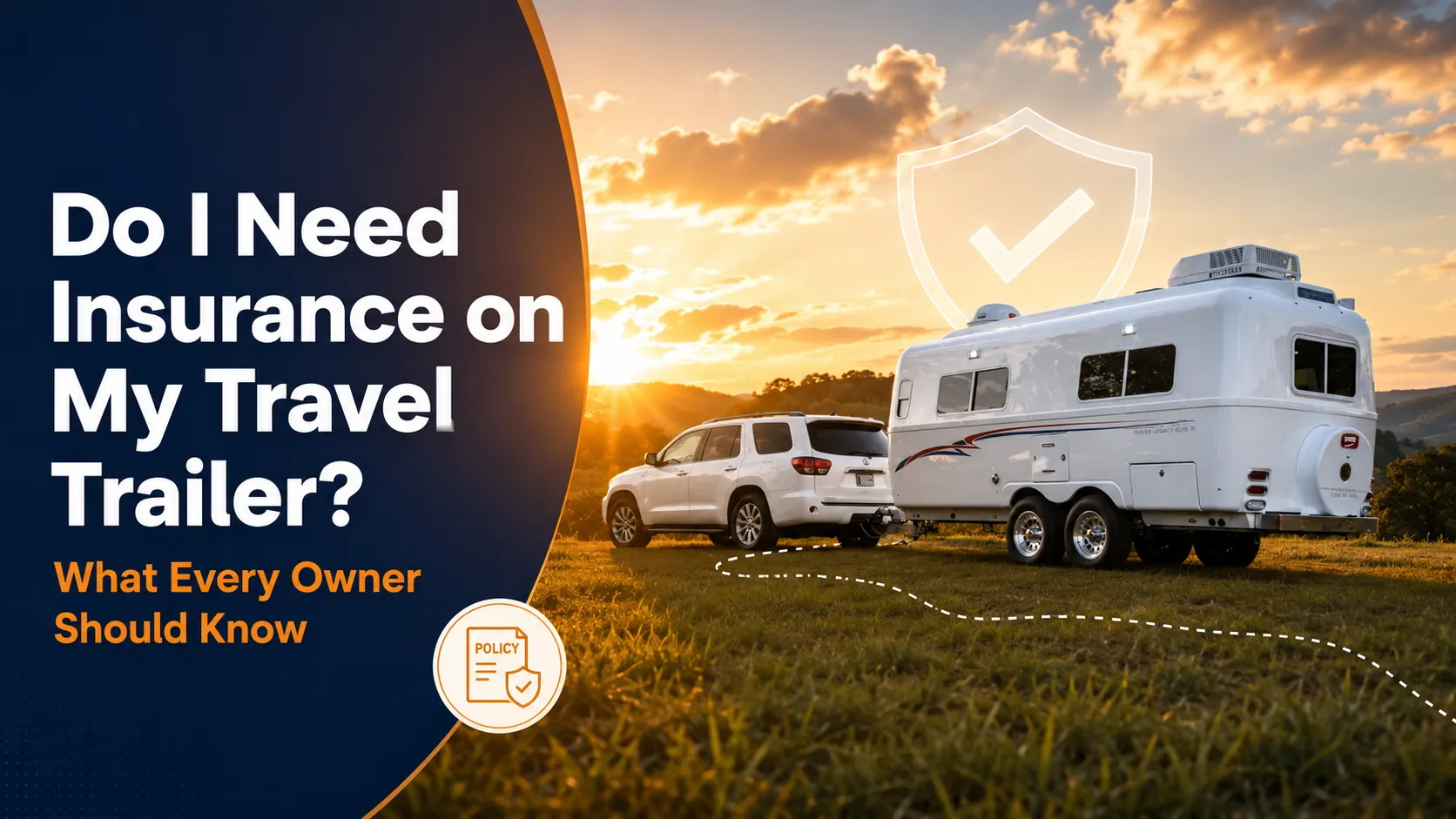
Do I need insurance on my travel trailer? It’s one of the most Googled questions among new RV owners, right up there with “why is my awning already broken.” The honest answer is: usually not by law, but almost always by common sense. Your tow vehicle’s liability policy covers some of the risk, but your trailer itself is a different story. Let’s walk through what’s actually required, what’s smart, and how to shop for the best RV insurance for your rig.
Table of Contents
The Short Answer: It Depends on Your State
According to Progressive, there are no travel trailer insurance requirements in any state, because a travel trailer has no engine and isn’t classified as a motor vehicle on its own. What every state does require is liability coverage on the vehicle towing it. So the trailer rides along under your truck or SUV’s policy, at least for liability purposes.
How Travel Trailer Insurance Actually Works
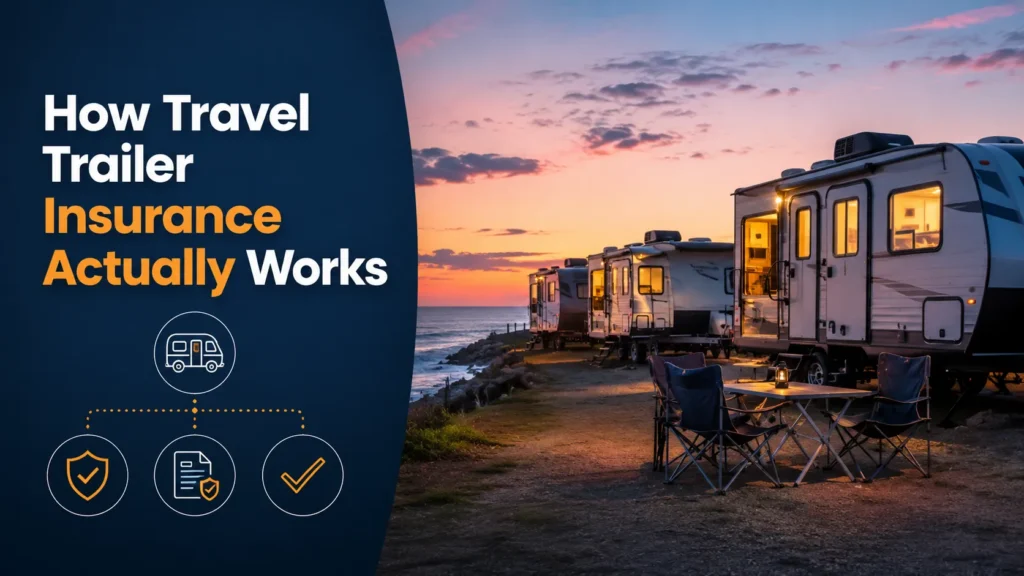
Liability Coverage Through Your Tow Vehicle
When your travel trailer is properly hitched, your tow vehicle’s auto liability insurance typically extends to cover it. That means if you cause an accident while towing, your car insurance handles the other party’s injuries and property damage. It does not, however, pay to fix or replace your own trailer, which is where a dedicated policy comes in.
Comprehensive and Collision Coverage
This is the real reason people buy travel trailer insurance. Comprehensive coverage protects against theft, fire, hail, and vandalism, while collision coverage pays for accident damage to the trailer itself. If you financed your rig, your lender will almost certainly require both, since the trailer is collateral until it’s paid off.
States With Specific Trailer Insurance Rules
Most states treat a travel trailer like cargo for insurance purposes, but a few carve out exceptions. New York requires liability insurance on trailers regardless of weight, Florida sets minimum liability and personal injury protection limits, and Michigan requires coverage for any trailer with more than two wheels under its no-fault law. Rules do change, so always confirm current requirements with your state’s DMV before you tow across state lines.
Does My Car Insurance Cover My Camper?
Partly. Your auto policy’s liability coverage generally follows the trailer while it’s attached, but comprehensive and collision protection for the trailer itself is a separate matter. If a tree branch falls on your parked camper or someone breaks in at a campground, your car insurance almost never pays for that. It’s built for the vehicle you’re driving, not the box you’re pulling behind it.
What Does RV Insurance Not Cover?
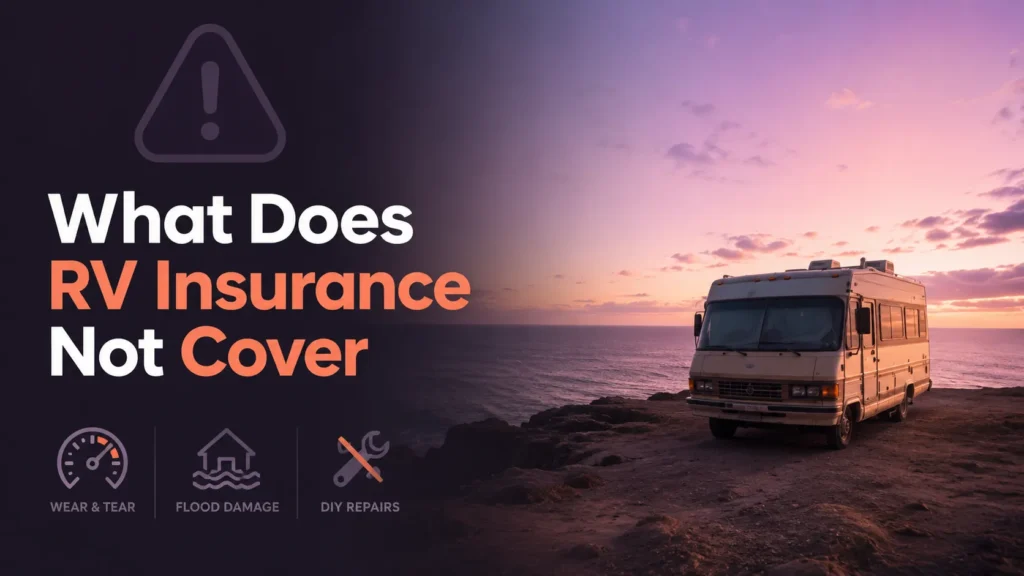
RV insurance has limits like any policy. It typically won’t cover mechanical breakdowns, normal wear and tear, damage from failing to maintain the trailer, or accidents caused by unlisted drivers. Personal belongings inside may need separate contents coverage, and full-time living expenses usually require an upgraded, full-timer policy rather than a standard recreational one.
Average Cost of Travel Trailer Insurance
Travel trailers cost noticeably less to insure than motorhomes, since they have no engine to repair. According to Progressive’s 2024 data, the countrywide average annual premium for a travel trailer policy was $594, while full motorhome coverage averaged over $1,000. Expect a rough range of $300 to $600 a year for standard recreational use, more if you live in your trailer full-time or own a high-value model.
Travel Insurance for RV Trips vs. Travel Trailer Insurance
Don’t confuse the two. Travel trailer insurance protects the physical trailer year-round, while travel insurance for RV trips is a short-term policy covering things like trip cancellation, medical emergencies, or lost gear during a specific road trip. Frequent travelers often carry both: a standing travel trailer insurance policy for the rig, plus trip-specific travel insurance for RV trips that cross state lines or borders.
What About Business Use? Liability Insurance for Tour Guide Companies
If you rent out your trailer or run guided RV excursions, a personal policy won’t cut it. Businesses that lead trips typically need liability insurance for tour guide companies, a separate commercial product covering client injuries, property damage, and professional liability during organized outings. Even small operators researching liability insurance for tour guide companies should compare quotes early, since mixing personal travel trailer insurance with business use can void your claim.
The 10-Year Rule and Insurance Age Limits
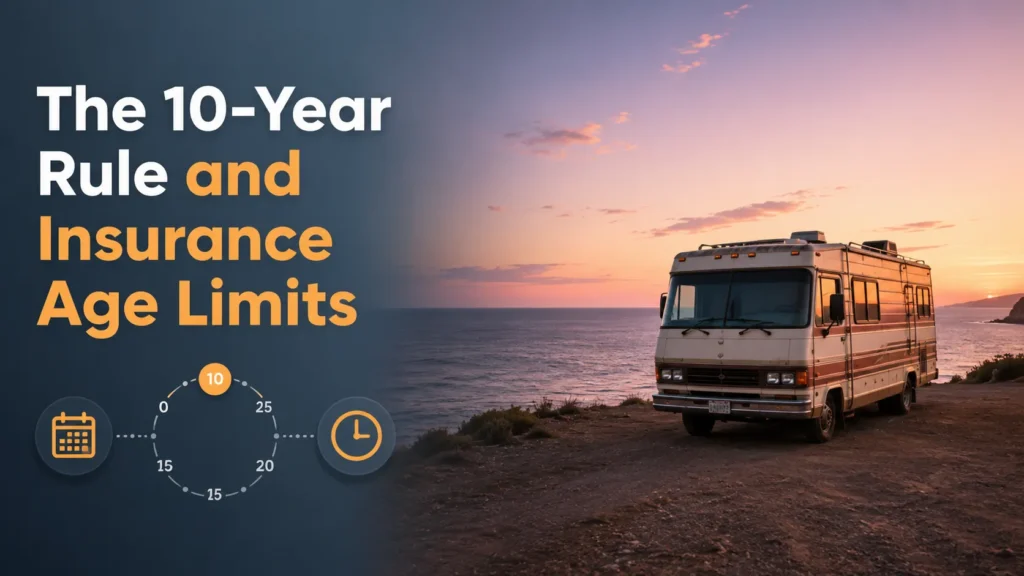
Some private RV parks enforce an informal “10-year rule,” turning away rigs older than a decade to keep their grounds looking newer and reduce maintenance-related risk. This isn’t an insurance law, but insurers apply their own version: some carriers limit coverage or raise premiums for trailers older than 15 to 20 years, so it’s worth asking before you buy a vintage model.
How to Find the Best RV Insurance
The best RV insurance for you depends on how you use your trailer. Companies like Progressive and GEICO both offer specialized travel trailer insurance, and comparing at least three quotes is standard advice from the Insurance Information Institute. If you’re still mapping out your RV trip itself, our travel guides cover route planning, and our GetYourGuide review is handy if you’re booking activities along the way.
Frequently Asked Questions
Should you get insurance on a travel trailer?
Yes, it’s smart even where it’s not required by law. Comprehensive and collision coverage protects your investment from theft, weather, and accident damage that your tow vehicle’s policy won’t touch.
Do I need to get insurance for a travel trailer?
Legally, most states don’t require it. Practically, if you financed the trailer or want protection against theft and damage, a dedicated travel trailer insurance policy is worth the modest cost.
Does a travel trailer need its own insurance?
For liability, no, your tow vehicle’s policy usually covers that. For physical damage to the trailer itself, yes, since auto insurance doesn’t protect the trailer’s structure or contents.
What insurance do you need for a camper trailer?
Most owners choose comprehensive and collision coverage, plus optional contents and roadside assistance. Full-time RVers often add liability and emergency living expense coverage similar to a homeowners policy.
What is the average cost to insure a travel trailer?
Around $300 to $600 per year for standard recreational use, based on Progressive’s 2024 average of $594 annually, though cost varies with trailer value, location, and usage.
What is the 10 year rule for travel trailers?
It’s an informal policy some private RV parks use to restrict rigs older than 10 years, mainly for appearance and safety reasons. It’s a park rule, not an insurance requirement.
Does my car insurance cover my camper?
Only partly. Liability coverage typically extends to your hitched trailer, but comprehensive and collision protection for the trailer itself requires a separate travel trailer insurance policy.
Do I need to tell my insurance if I tow a trailer?
Yes. Insurers recommend disclosing regular trailer towing, since it can affect your liability exposure and, in some cases, your auto policy’s terms and pricing.
What does RV insurance not cover?
Common exclusions include mechanical breakdowns, wear and tear, damage from poor maintenance, and accidents caused by drivers not listed on your policy.
Final Thoughts
So, do I need insurance on my travel trailer? Not by law in most states, but yes if you want real protection for your rig. Between lender requirements, campground liability, and the simple fact that trailers get dented, hailed on, and occasionally broken into, a modest travel trailer insurance policy is cheap peace of mind for what’s often a five-figure investment.
This article contains affiliate links. If you purchase through our links, we may earn a commission at no extra cost to you. We only recommend products we genuinely believe in. Read our Affiliate Disclaimer for full details.