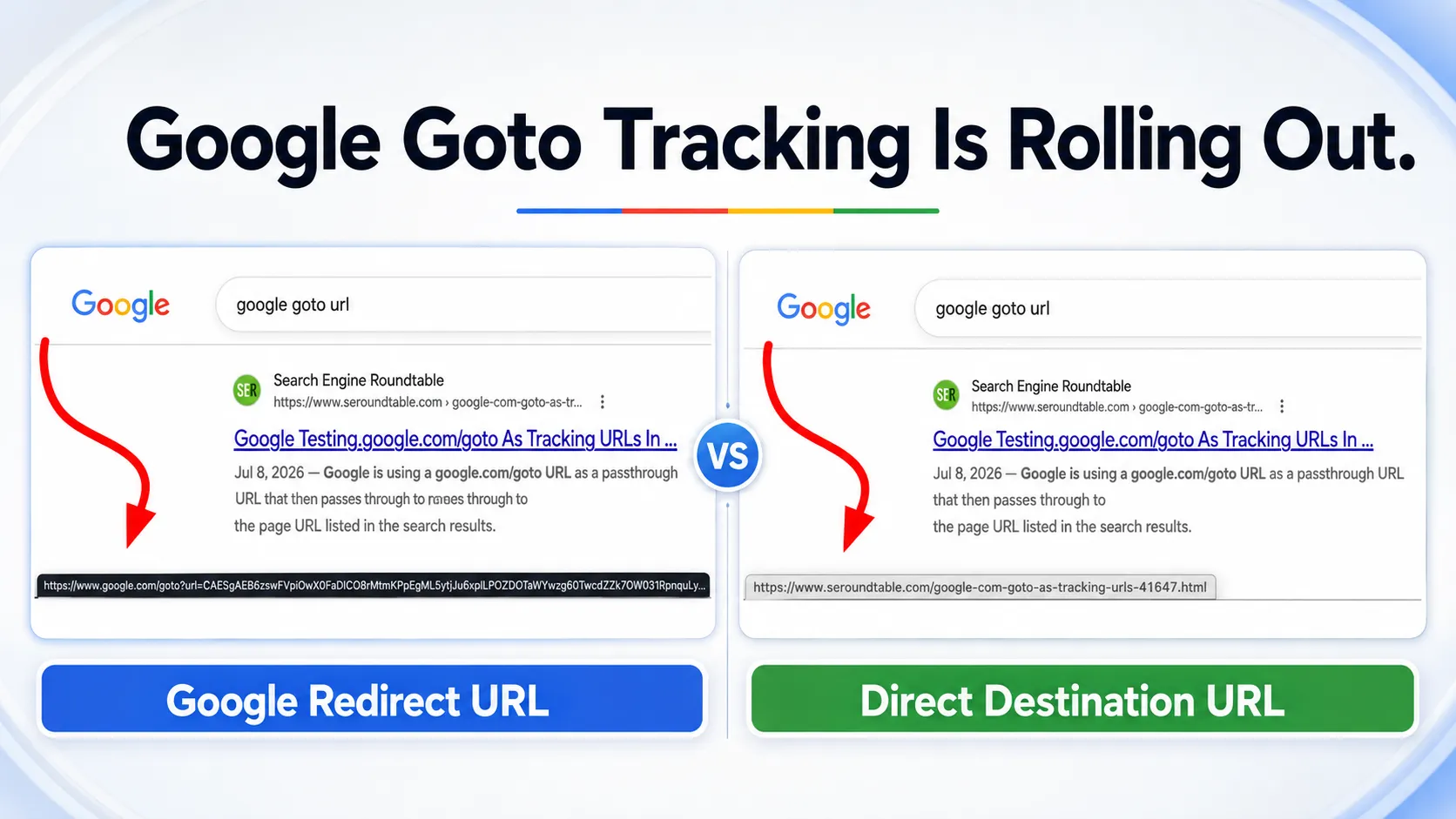
Google goto tracking parameters are rolling out across Google Search, routing result clicks through a google.com/goto URL before sending users to the destination page. Google says the change protects its services and users from evolving abuse. For publishers, no website change is required, but SEO teams should watch rank-tracking tools, click attribution, and analytics reports for differences during the rollout.
Table of Contents
How the google.com/goto URL Changes a Click
The new route adds a Google-controlled stop between the results page and the publisher. That extra hop may look tiny, but automated tools now must follow the redirect to discover the destination. In internet terms, it is less a scenic detour and more a tollbooth for bots.
| Stage | Previous behavior | New behavior |
| Result link | Direct publisher URL | Encoded google.com/goto URL |
| Click path | Google to publisher | Google to redirect to publisher |
| Tool requirement | Read destination in HTML | Follow redirect to resolve destination |
| Confirmed purpose | Standard linking | Google anti-scraping measures against abuse |
This server-side design gives Google more control over access patterns. Readers interested in how another major platform change affects users can also see our report on Walmart adding Google Pay at checkout. Both stories show large platforms changing the small technical steps that sit between a user and a completed action.
Google Confirms New Search Redirect System
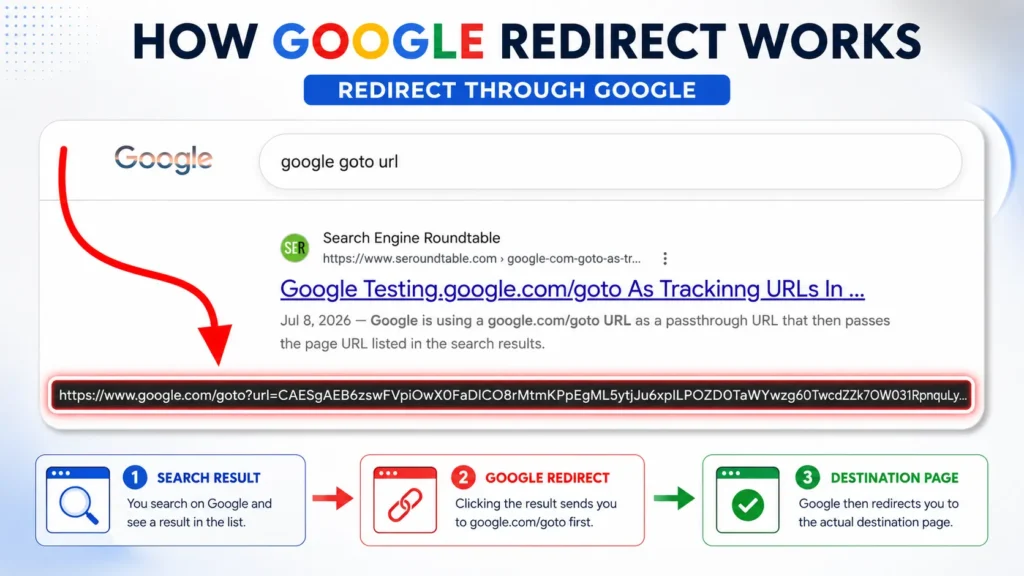
Google has confirmed that Google goto tracking parameters are rolling out in Search. Instead of every result linking directly to a publisher, some Google Search redirect links now pass through a google.com/goto URL. Google described the change as one of its technical steps against evolving abuse, but it did not identify specific companies or promise that every search result will use the format.
For everyday searchers, the click should still land on the intended page. The visible difference appears when users hover over a result or inspect its link. For publishers and marketers, the practical question is whether the extra redirect changes measurement or makes Google SERP tracking harder. Google has not reported a ranking or indexing change.
What Is Confirmed and What Remains Analysis
Confirmed: Google says the Google Search redirect links are rolling out as technical protection against abuse. Industry observers reported widespread use across several residential IP providers, but Google has not published a percentage, geographic schedule, technical specification, or analytics impact assessment.
Analysis: the encoded destination and server-side hop appear designed to complicate automated extraction. That interpretation fits Google anti-scraping measures, but Google did not publicly name SerpApi, rank trackers, or AI companies in its rollout statement. The distinction matters because a plausible motive is not the same thing as a documented fact.
The open questions are practical. Google Search redirect links could change how quickly vendors resolve destinations, while Google SERP tracking reports may briefly show thinner or delayed datasets. Google anti-scraping measures could also evolve without notice, since the company described a continuing response to abuse rather than a one-time project. Publishers should therefore treat the google.com/goto URL as a measurement issue to test. Google has not given them evidence that Google goto tracking require site-side repairs.
Security changes often carry side effects that teams only discover through monitoring. Our report on the ToxicPanda 2.0 Android banking Trojan offers a separate example of why technical controls and real-world behavior both need scrutiny.
Why SEO Tools and Publishers Should Pay Attention
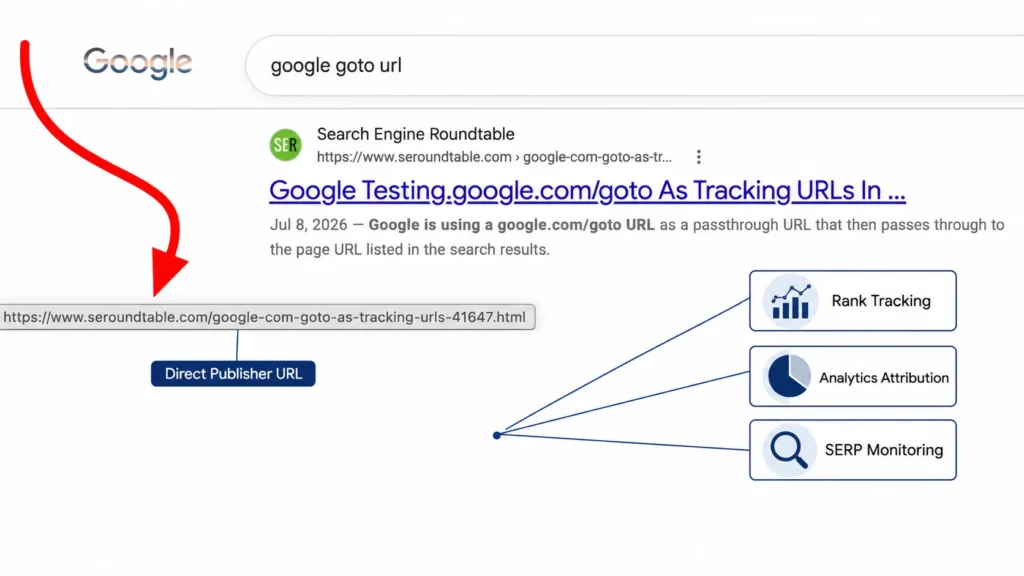
Google anti-scraping measures can raise the cost of collecting search results at scale. A crawler that once extracted destination links directly may need to request hundreds of redirects per results set. That can slow Google SERP tracking, increase infrastructure costs, or create temporary gaps while vendors adjust.
The rollout also deserves an analytics check, not an analytics panic. Google has not said the redirect changes organic attribution. SEO teams should compare Search Console clicks with analytics sessions before altering tags, canonicals, or referral settings. For a broader look at platform permissions and data access, our coverage of ChatGPT’s iMessage controls explores similar questions about convenience, control, and safeguards.
How the SerpApi Google Lawsuit Fits In
The SerpApi Google lawsuit provides important context, but it does not prove the purpose of the redirect. Google sued SerpApi in December 2025, alleging that the company circumvented safeguards to scrape copyrighted material appearing in search results. On July 20, 2026, a federal judge dismissed Google’s DMCA claims, allowing a limited chance to amend claims tied to copyrighted content.
SerpApi later announced that Google filed an amended complaint. On August 25, SerpApi said it had moved to dismiss the amended claims. The case remains contested, so readers should avoid treating either party’s public statement as a final legal finding. Google SERP tracking vendors may still view the new redirect as a technical counterpart to the courtroom fight.
Even so, the SerpApi Google lawsuit and Google Search redirect links remain separate developments unless court filings or Google connect them. That caution keeps the legal context useful without turning timing into proof. The SerpApi Google lawsuit may shape industry debate, but the redirect’s actual impact will emerge through observable data.
What SEO Teams Should Do Now
- Check live results manually across several devices and networks for the google.com/goto URL.
- Compare Search Console clicks, landing-page sessions, and source or medium reports for unusual divergence.
- Ask rank-tracking vendors whether Google goto tracking parameters affect freshness, coverage, or pricing.
- Document a baseline before changing analytics settings, because unnecessary fixes can create new attribution errors.
Teams evaluating new hardware for heavier data workloads can separately review our Apple M6 chip coverage. For this Google change, however, observation beats shopping: there is no code publishers need to install.
Verdict
Google goto tracking mark a meaningful infrastructure change, not a confirmed ranking update. The google.com/goto URL should remain largely invisible to searchers, while third-party tools may face more work resolving links at scale. Publishers should monitor analytics and vendor reports as Google anti-scraping measures develop, preserve baselines, and wait for evidence before making technical changes. The smartest response today is calm verification, not dashboard demolition.