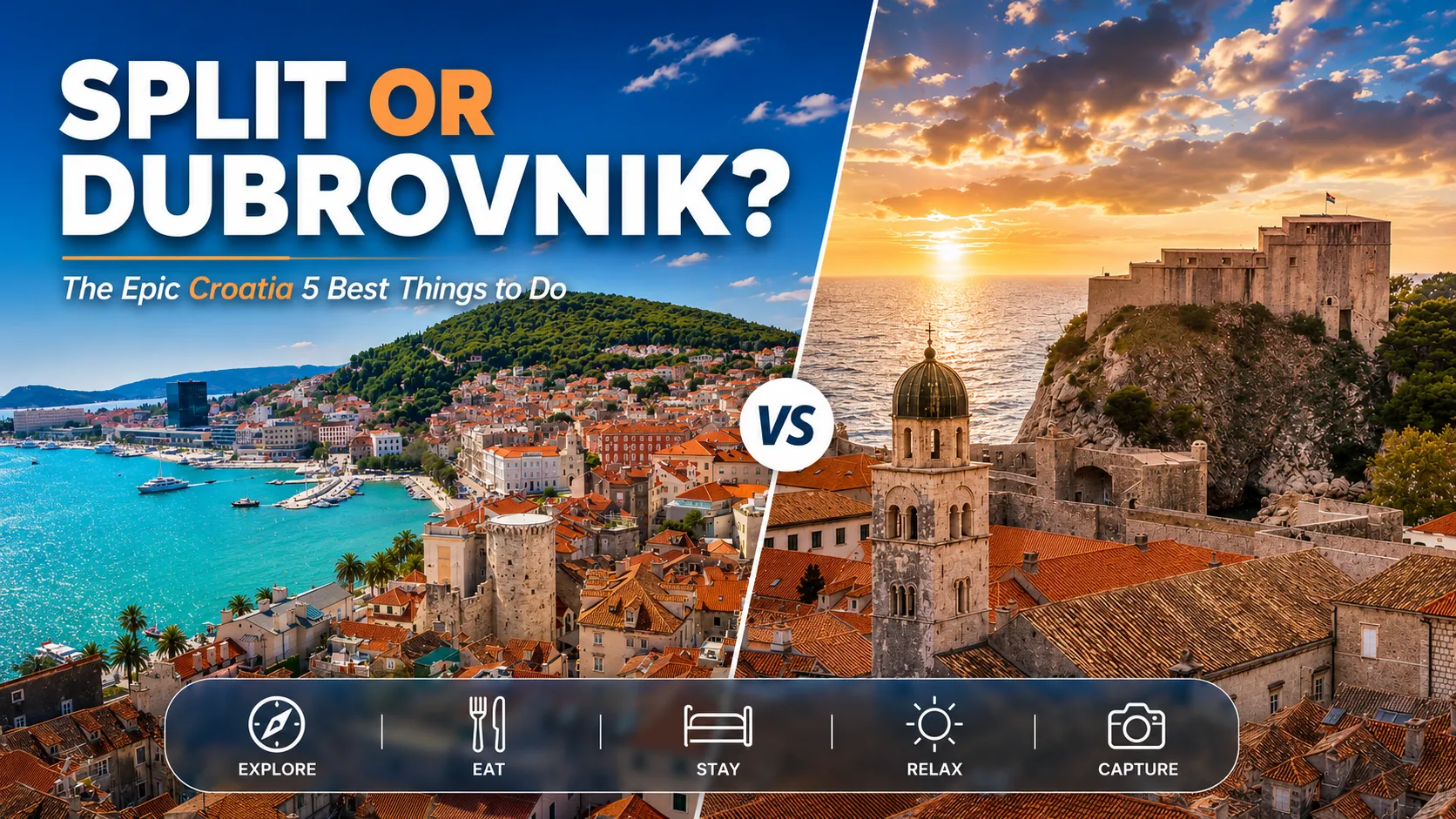
Choosing between Split or Dubrovnik is the Croatian version of picking a favorite child, except one child has a 1,700-year-old Roman palace and the other has walls straight out of a fantasy series. Both cities sit on the Adriatic, both are stunning, and both will absolutely ruin regular vacations for you afterward. Here is how they actually compare.
Table of Contents
Quick Answer: Split or Dubrovnik at a Glance
- Best for history buffs who like a living city: Split
- Best for postcard views and Game of Thrones fans: Dubrovnik
- Best for a tighter budget: Split, by a noticeable margin
- Best for island hopping: Split, thanks to its ferry connections
- Best if you only have one week: either city alone, or both if you have 5+ days
Split or Dubrovnik: The Basics
Split is Croatia’s second-largest city, home to roughly 160,000 residents and built directly around Diocletian’s Palace, a UNESCO World Heritage Site since 1979. Dubrovnik sits farther south on the Dalmatian Coast, with a much smaller, more compact Old Town that draws crowds for its dramatic stone walls and Renaissance architecture.
Split feels like a real, working city that happens to have Roman ruins running through it. Dubrovnik feels more like stepping onto a film set, which makes sense, since parts of it literally were one. The split versus Dubrovnik debate really comes down to whether you want lived-in history or polished spectacle.
Local Culture in Split
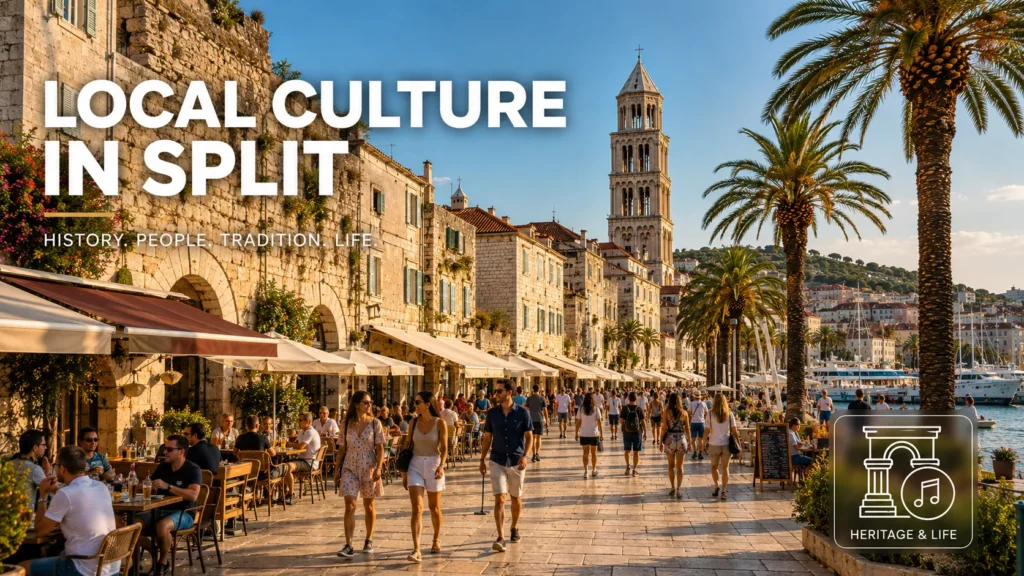
Local culture in Split centers on Diocletian’s Palace, built between the late 3rd and early 4th century AD as the retirement home of Roman Emperor Diocletian (UNESCO). More than 3,000 people still live and work inside the palace walls today, so you will see laundry hanging over Roman columns and locals buying groceries at the Pazar market a few steps from ancient gates.
The Riva, Split’s palm-lined waterfront promenade, is where locals gather for evening coffee and people-watching. Climb Marjan Hill for pine forest trails and skyline views, or ring the bell tower at the Cathedral of St. Domnius, built inside Diocletian’s original mausoleum, for one of the best panoramas on the coast.
Best Things to Do in Split
- Wander Diocletian’s Palace and its underground cellars, Peristyle, and Jupiter’s Temple
- Climb the Cathedral of St. Domnius bell tower for rooftop views
- Hike or bike Marjan Hill’s forested trails above the city
- Catch a ferry to Hvar or Brač for an easy island day trip
- Browse the Mestrović Gallery for work by Croatia’s best-known sculptor
Local Culture in Dubrovnik
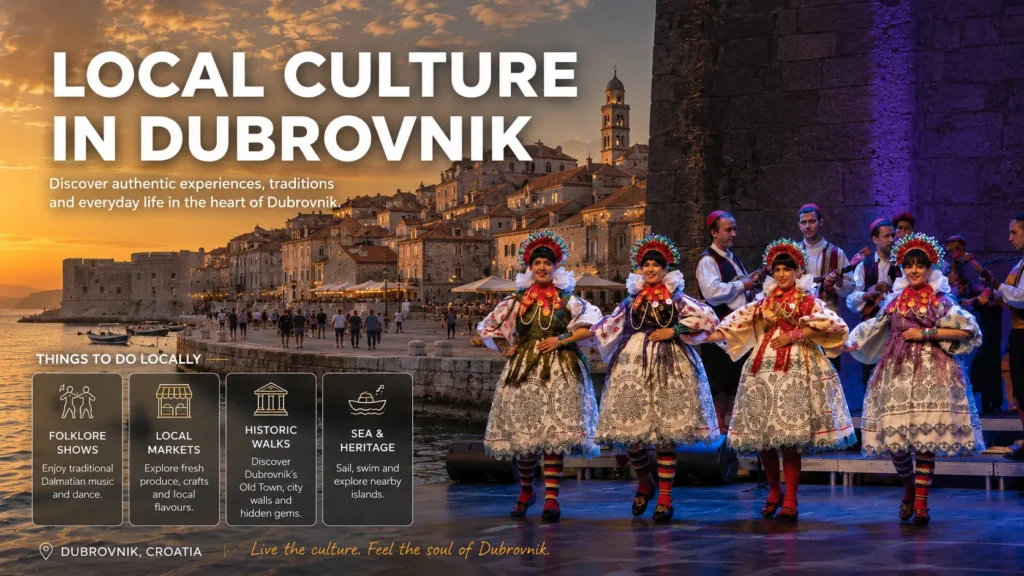
Local culture in Dubrovnik revolves around the Old City walls, built mostly between the 12th and 17th centuries and stretching nearly 1.2 miles around the historic core. The main street, Stradun, is lined with limestone buildings polished smooth by centuries of foot traffic, leading to landmarks like the Rector’s Palace and Sponza Palace.
Dubrovnik earned global fame as the primary filming location for King’s Landing in Game of Thrones, and fans still walk the walls trying to match scenes to real staircases. The city’s culture leans elegant and a little formal, shaped by centuries as an independent maritime republic that rivaled Venice.
Best Things to Do in Dubrovnik
- Walk the full City Walls loop, about a 1.2-mile circuit with Adriatic views
- Ride the cable car up Mount Srđ, especially near sunset
- Take a short boat ride to Lokrum Island, a peaceful nature reserve
- Explore the Rector’s Palace and Franciscan Monastery
- Book a Game of Thrones filming locations walking tour through the Old Town
If you are still mapping out the rest of your Croatia itinerary, our Europe travel guides cover nearby stops worth adding, from Plitvice Lakes to the islands of the Dalmatian Coast.
Food and Dining: Split vs Dubrovnik

Split’s food scene feels casual and approachable. Bokeria Kitchen and Wine Bar serves Mediterranean dishes with a modern twist inside the palace walls, Fetivi is a go-to for traditional, budget-friendly Dalmatian tavern food, and Basta turns out some of the city’s best fresh pizza. Dvor rounds things out with a waterfront patio that makes any meal feel like an occasion.
Dubrovnik’s dining leans more refined, with restaurants built around fine dining and inventive takes on classic Dalmatian cuisine. Expect higher prices, but also more elaborate plating and views that justify the splurge. Wine lovers should stop at D’Vino Wine Bar for a well-curated Croatian wine list, or Buzz Bar for a craft cocktail with a City Walls backdrop.
Where to Stay in Split vs Dubrovnik
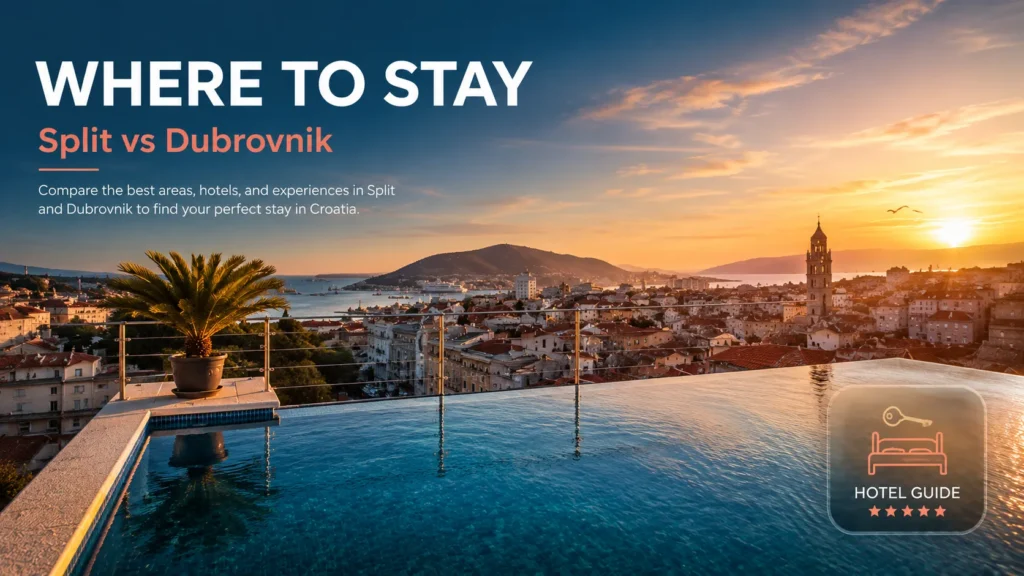
In Split, staying inside or near Diocletian’s Palace puts you within walking distance of nearly everything, and budget-friendly options are easy to find. In Dubrovnik, Old Town accommodation is limited and pricey, so many travelers base themselves in Lapad, a peninsula about 15 to 20 minutes on foot from the City Walls, with its own beaches, cafes, and a more relaxed, residential feel.
For a convenient stay, check accommodation options near your preferred area before booking. In Split, properties such as House Sandra and Split City Rooms offer options close to the historic center, while in Dubrovnik, Hotel Lapad is a good choice for travelers who prefer the relaxed Lapad area. For hotels, tours, day trips, and other activities, we also recommend browsing GetYourGuide, where you can compare experiences and book activities in both Split and Dubrovnik.
Is Split or Dubrovnik Better for Families
Split’s flatter layout, sandy beaches, and lower prices make daily logistics easier with kids in tow. Dubrovnik’s Old Town involves a lot of stone stairs and steep lanes, which can wear out smaller children fast, though older kids and teens who love Game of Thrones or history in general tend to be captivated by the walls and fortresses.
Split vs Dubrovnik: Which Is Better for Beaches
Split’s beaches, like Bačvice near the city center, tend to be sandy or fine gravel and easier to reach on foot. Dubrovnik’s beaches, including Banje Beach and the highly rated Sveti Jakov Beach, are smaller, rockier, and dressed up with dramatic Old Town backdrops. Neither city disappoints for a swim, but Split wins for space and Dubrovnik wins for scenery.
Split or Dubrovnik: Which Has Better Nightlife
Split’s nightlife is younger, louder, and cheaper, with bars tucked directly into Diocletian’s Palace and pub crawls that run until sunrise. Dubrovnik’s nightlife trades volume for atmosphere, favoring wine bars and cocktail lounges, including spots built right into the City Walls. If you want a party, pick Split. If you want a nice glass of Croatian wine with a view, pick Dubrovnik.
Is Split or Dubrovnik Better for Couples
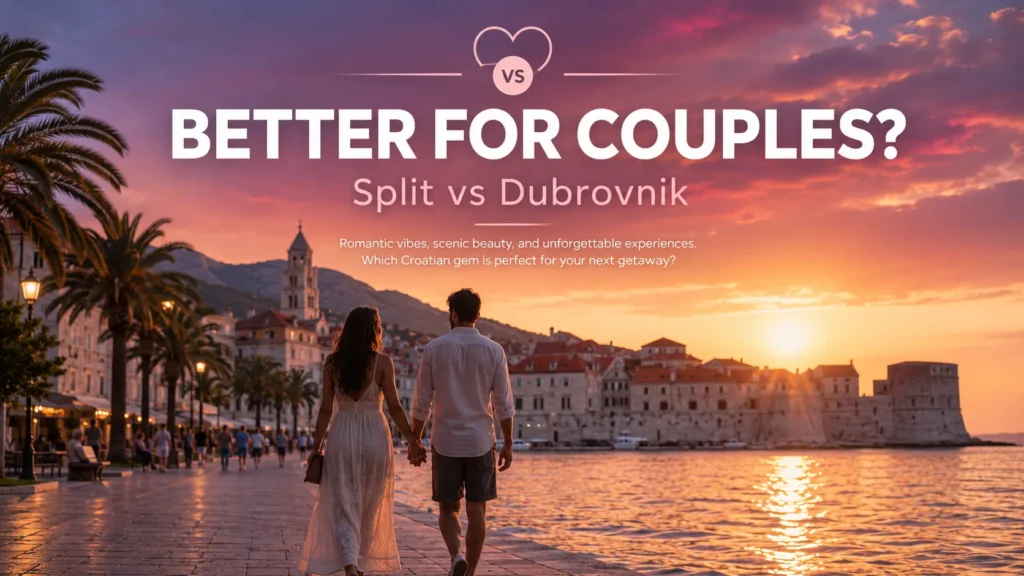
Is Split or Dubrovnik better for couples? Dubrovnik generally takes this one. Sunset drinks on the City Walls, quiet dinners in hidden courtyards, and that unmistakable golden-hour glow on the rooftops make it a strong romantic pick. Split still works well for couples who prefer a livelier, less curated vibe, especially paired with a private island day trip.
Couples planning a longer Adriatic honeymoon or anniversary trip might also enjoy our romantic destination guides for more coastal city comparisons beyond Croatia.
Split vs Dubrovnik: Cost Comparison
Split is noticeably cheaper across the board. A mid-range apartment near the palace runs roughly €100 to €160 a night, a main course costs about €18 to €30, and a local beer is around €4 to €5. Diocletian’s Palace itself is free to explore.
Dubrovnik costs more almost everywhere. A main course typically runs €25 to €40, a beer can hit €7 to €8, and walking the City Walls costs around €35 per person. Budget hotels are also limited inside the Old Town, so many visitors stay in the nearby Lapad area instead.
Day Trips from Split and Dubrovnik
Split makes an excellent base for day trips to Krka National Park’s waterfalls, the historic town of Trogir, and islands like Hvar and Brač, all reachable by ferry. Dubrovnik’s day-trip options lean smaller in scale, including Lokrum Island, the Elaphiti Islands, and cross-border trips to Kotor in nearby Montenegro.
How to Choose for Your Next Destination
Here is a simple way to approach how to choose for your next destination between these two: if you care more about affordability, nightlife, and island-hopping logistics, Split wins. If you care more about postcard scenery, romance, and walkable medieval architecture, Dubrovnik wins. Travelers with five or more days should seriously consider both, since they genuinely complement each other rather than compete.
Getting Between Split and Dubrovnik
High-speed catamarans connect the two cities in about 4.5 hours, run seasonally from roughly April through October, and start around €40 (Ferryhopper). Buses run year-round and cost less, though the trip takes longer along the coastal road. Both routes pass through genuinely gorgeous scenery, so neither option feels like wasted travel time.
Split Airport sits about 12 miles from the city center and handles the most international traffic on the Croatian coast, while Dubrovnik Airport is roughly 22 kilometers from town, about a 30 to 40 minute transfer to the port area. Many travelers fly into one city and out of the other to avoid backtracking, and several airlines run direct seasonal flights from major US hub cities to both airports in summer.
Renting a car is another option if you want to stop at smaller towns like Ston, known for oyster farms, or the Trsteno Arboretum along the coastal road between the two cities. It takes longer than a direct ferry or bus, but it turns the transfer itself into part of the vacation instead of just a travel day to get through.
Best Time to Visit Split or Dubrovnik
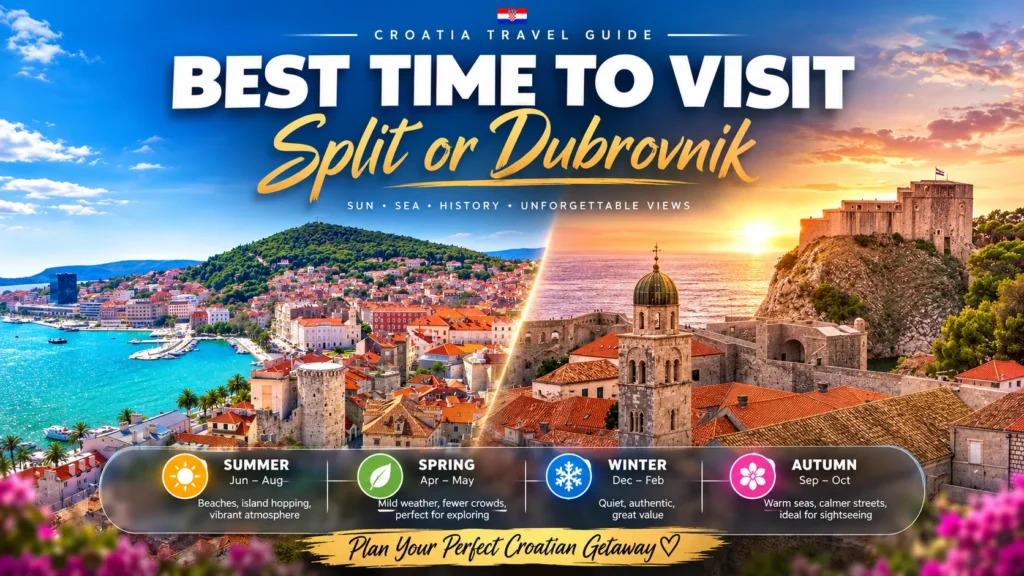
Late spring (May to June) and early fall (September to October) offer warm enough seas for swimming, thinner crowds, and lower prices than peak summer. July and August bring the hottest weather, the highest prices, and ferries that sell out fast, so book well ahead if that is your only window.
Winter visits are possible too, especially in Dubrovnik, where the Old Town takes on a festive, uncrowded charm around the holidays, though many hotels, restaurants, and ferry routes scale back or close entirely between November and March. Split stays a bit more active year-round since it functions as a regular working city rather than a purely seasonal destination.
For tours, day trips, and local experiences, GetYourGuide is a convenient option for finding and booking activities in Split and Dubrovnik in advance—especially during the busy summer months.
Crowds and Overtourism: What to Expect
Dubrovnik’s compact Old Town and reputation as King’s Landing have made it one of the most cruise-heavy ports in the Adriatic, and the main street can feel shoulder-to-shoulder by midday in peak season. Arriving early morning or staying past sunset, once day-trippers head back to their ships, makes a noticeable difference.
Split deals with crowds too, especially near the Peristyle and Golden Gate, but its larger footprint and everyday city functions spread visitors out more naturally. If crowd fatigue is a real concern for your trip, that alone might tip the Split versus Dubrovnik decision in Split’s favor.
Split vs Dubrovnik for Solo Travelers
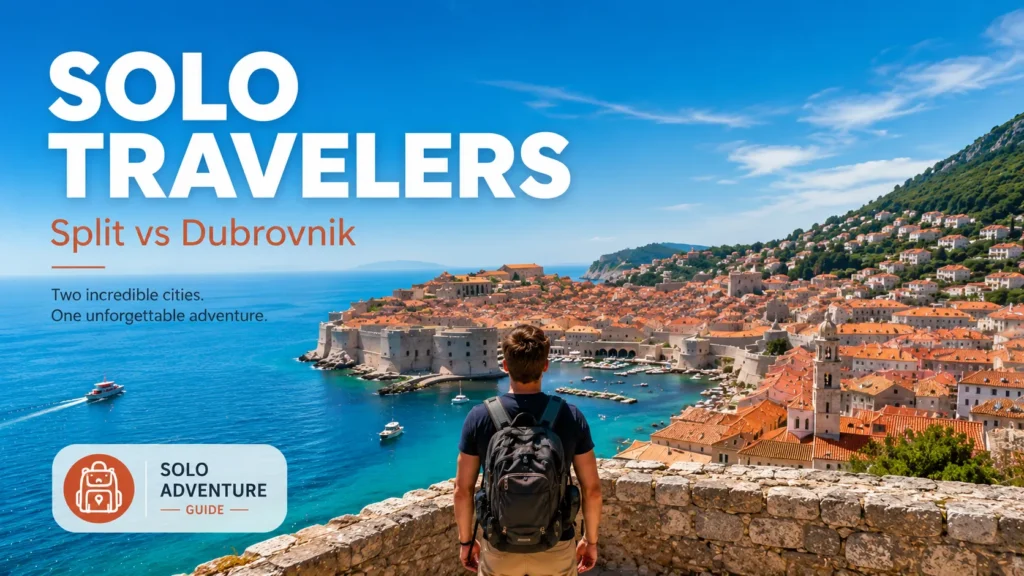
Split’s hostel scene, pub crawls, and walkable palace core make it an easy, social pick for solo travelers, especially younger backpackers moving between islands. Dubrovnik works fine solo too, but its higher prices and quieter, more romantic atmosphere suit travelers looking for a peaceful reset rather than a built-in social scene.
Practical Tips: Language, Currency, and Safety
Croatia adopted the euro as its official currency in January 2023, so both Split and Dubrovnik use euros, which simplifies budgeting if you are also visiting other Eurozone countries on the same trip. Croatian is the official language, but English is widely spoken across both cities’ tourism industries, from hotel front desks to restaurant staff.
Both cities rank among the safer destinations in Europe for visitors, with low rates of violent crime. The usual city precautions still apply: watch your belongings in crowded Old Town streets, book skip-the-line tickets for popular sites during peak season, and wear real shoes, since both Old Towns are paved in smooth, centuries-old stone that gets slippery fast. Frequently Asked Questions About Split or Dubrovnik
Split or Dubrovnik, which is better overall?
Neither city is objectively better. Split suits budget travelers and nightlife fans, while Dubrovnik suits couples and history lovers chasing dramatic scenery and city walls.
Split vs Dubrovnik, which is better for a first trip to Croatia?
Split works well as a first stop since it is cheaper, easier to navigate, and a strong base for island day trips before heading south.
Is Split or Dubrovnik better for couples?
Dubrovnik generally edges ahead for couples, thanks to sunset walls, elegant wine bars, and a more romantic, cinematic atmosphere overall.
What is Split known for?
Split is known for Diocletian’s Palace, a 1,700-year-old Roman complex where thousands of residents still live, work, and shop today.
What is Dubrovnik known for?
Dubrovnik is known for its massive medieval City Walls and its role as the primary filming location for King’s Landing in Game of Thrones.
How do you get from Split to Dubrovnik?
High-speed catamarans take about 4.5 hours and run seasonally from April to October, while buses run year-round and cost less.
Is Split cheaper than Dubrovnik?
Yes. Split’s hotels, restaurants, and drinks all run noticeably cheaper than Dubrovnik, and Diocletian’s Palace itself is free to explore.
How many days do you need for Split or Dubrovnik?
Two to three days works well for either city alone. Travelers with five or more days should consider visiting both.
Which city has better beaches, Split or Dubrovnik?
Split has more sandy, spacious beaches like Bačvice, while Dubrovnik has smaller, rockier beaches with dramatic Old Town backdrops.
Can you visit Split and Dubrovnik in one trip?
Yes. Ferries and buses connect the two cities daily in season, making a combined Split and Dubrovnik itinerary a popular and easy choice.
Final Verdict: Split vs Dubrovnik Which Is Better
There is no wrong answer in the Split or Dubrovnik debate, only the right answer for your travel style. Pick Split for affordability, island hopping, and a living Roman city. Pick Dubrovnik for jaw-dropping walls, romance, and cinematic scenery. Or, if your schedule allows it, stop debating and book both. For more Croatia planning help, check our travel guides before you go.