
Typing “Tokyo To MT Fuji Bullet Train” into Google and expecting a train that drops you at the mountain’s front door? Here’s the honest twist: no bullet train actually stops at Mt Fuji itself. This guide explains exactly which real routes get you there, what they cost, and why the fastest option isn’t technically a bullet train at all.
Table of Contents
Is There Really a Tokyo To Mt Fuji Bullet Train?
Sort of. The Tokaido Shinkansen, Japan’s original bullet train line, stops at two stations near Fuji: Shin-Fuji and Mishima. Neither sits at the mountain itself, and both require a follow-up bus to reach Kawaguchiko, the main base for sightseeing and photos of Fuji.
Only Kodama trains, the slowest Shinkansen service, and a handful of Hikari trains actually stop at these two stations. Faster Nozomi trains blow straight past them, which surprises a lot of first-time visitors expecting to just hop on any bullet train and go.
Tokyo to Mt Fuji Train Tickets & Schedule
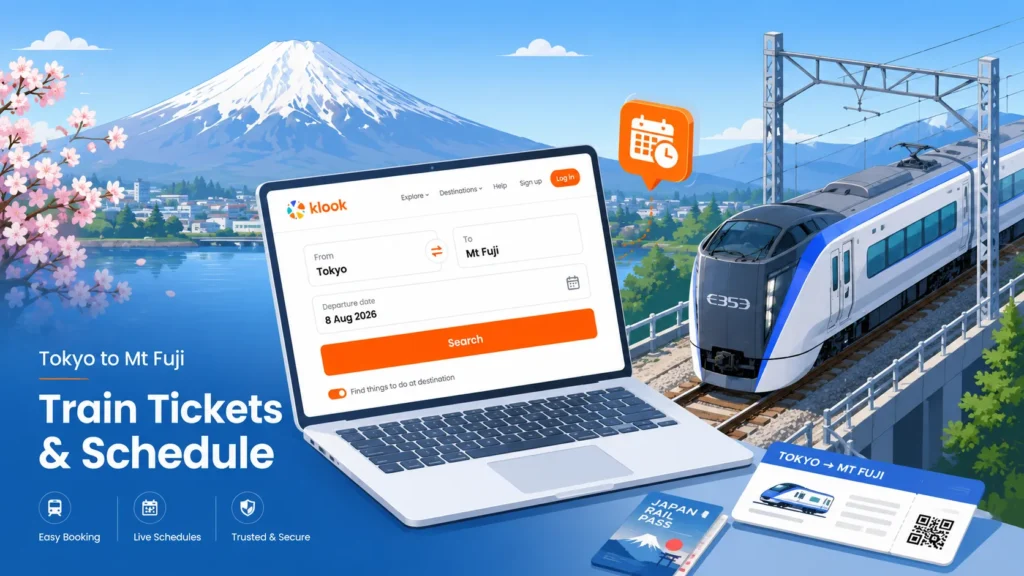
A one-way Kodama ticket from Tokyo Station to Shin-Fuji Station runs about 5,170 to 6,000 yen and takes roughly 60 to 80 minutes. Mishima Station sits at a similar price and travel time, around one hour, with slightly more frequent bus connections onward to Kawaguchiko.
From Shin-Fuji, a Fujikyu bus to Kawaguchiko Station takes about 110 minutes and costs roughly 2,250 yen. From Mishima, the bus runs closer to 90 minutes for about 2,530 yen. Add it up, and total Tokyo to Mt Fuji train Tickets & Schedule costs land around 8,250 to 8,500 yen one-way without a rail pass.
Checking the Tokyo to Mt Fuji train Tickets & Schedule online before you travel matters more than it sounds. Bus departures from Shin-Fuji and Mishima run on limited hourly windows, not constant service, so missing one connection can add a full hour to your trip.
How to Get to Mt Fuji from Tokyo by Train
There are three realistic train-based ways to make this trip, and they’re genuinely different experiences, not just three names for the same route. Picking the right one depends on whether you value speed, cost, or JR Pass coverage more.
Whichever option you pick, learning how to get to Mt Fuji from Tokyo by train comes down to accepting one honest fact: every route involves at least one transfer. Nobody boards a single train in central Tokyo and steps off at the base of the mountain.
Route 1: Bullet Train to Shin-Fuji, Then Bus
Take the Tokaido Shinkansen Kodama from Tokyo or Shinagawa Station to Shin-Fuji, then transfer to a Fujikyu bus bound for Kawaguchiko. Total travel time runs about 3 to 3.5 hours. The payoff is a genuinely iconic Fuji view from the train window if you sit on the right side.
Route 2: Bullet Train to Mishima, Then Bus
This route swaps Shin-Fuji for Mishima Station, with buses departing roughly hourly toward Kawaguchiko. Total journey time lands around 2.5 to 3 hours, slightly faster than the Shin-Fuji route and a solid pick if you’re also coming from Kyoto or Osaka on the same line.
Route 3: The Fuji Excursion Limited Express
This direct train runs from Shinjuku Station straight to Kawaguchiko Station in under two hours, with four morning departures. It’s technically a JR limited express, not a Shinkansen, but it’s the fastest and most convenient single-train option for most travelers heading to the Mount Fuji area.
How To Travel From Tokyo To Mount Fuji On a Budget
Highway buses are the cheapest way to make this trip by a wide margin. Direct buses run from Shinjuku Bus Terminal or Tokyo Station’s Yaesu Terminal to Kawaguchiko, taking about 1 hour 45 minutes to 2 hours and costing only 2,000 to 2,200 yen one-way.
For travelers without a Japan Rail Pass, that highway bus beats every train combination on price, and it’s often faster too, since it skips the Shin-Fuji or Mishima transfer entirely. The trade-off is comfort and legroom, which trains generally win on longer rides.
If budget is your main concern, the simplest answer to how to travel from Tokyo to Mount Fuji is the direct bus, full stop. Trains win on comfort and scenery, but nothing beats a bus ticket under 2,500 yen with zero transfers involved.
Tokyo to Mount Fuji Day Trip: Is Mount Fuji Worth It?
Yes, with realistic expectations. A Tokyo to Mount Fuji day trip built around the Fuji Excursion train or an early highway bus leaves you roughly 4 to 6 hours around Kawaguchiko before you need to head back for a reasonable return time.
That’s enough for lake views, the Chureito Pagoda photo spot, and a relaxed lunch, but not enough for actually climbing Fuji, which requires an overnight stay during the July to September climbing season. Guided day tours booked through Klook often bundle transport and stops into one simpler ticket.
Tips for Your Tokyo To Mt Fuji Bullet Train Trip
- Sit on the right side of the train leaving Tokyo for the best window views of Fuji.
- Book Shinkansen and Fuji Excursion seats ahead during cherry blossom and autumn foliage season.
- Remember the Fujikyu Railway portion beyond Otsuki isn’t covered by the Japan Rail Pass.
- Pack layers, since Kawaguchiko sits noticeably cooler than central Tokyo year-round.
Best Time of Year to Visit Mount Fuji
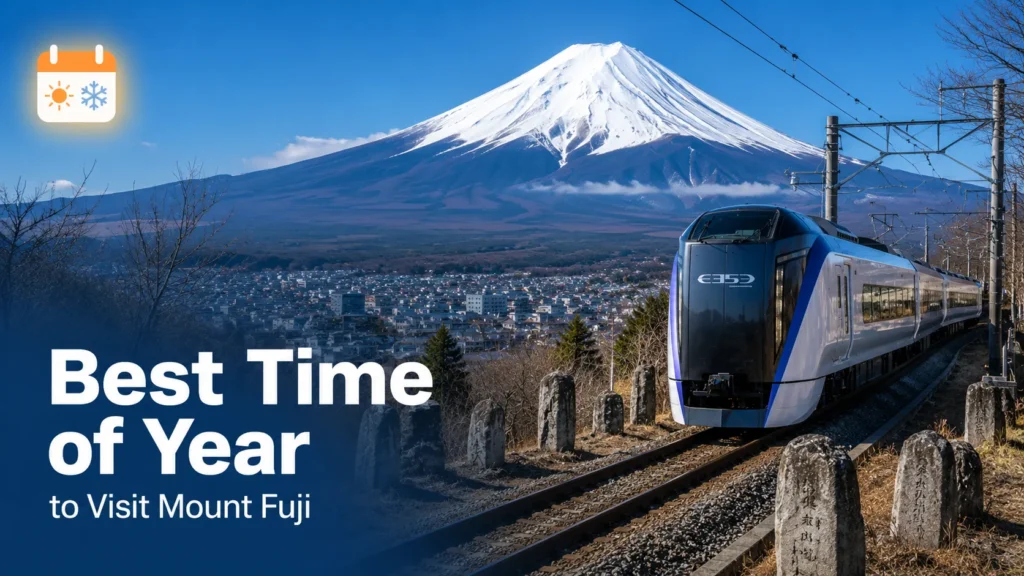
Late spring and autumn offer the clearest mountain views with comfortable hiking weather at lower elevations. The official climbing season runs July through early September, when mountain huts and the Fuji Subaru Line 5th Station bus actually operate. Winter brings the sharpest snow-capped photos but colder, windier viewpoints.
Final Verdict: Planning Your Trip
A true Tokyo To Mt Fuji Bullet Train doesn’t exist in the literal sense, but Shin-Fuji and Mishima get you close enough with a short bus ride to finish the job. Budget travelers should take the highway bus, speed-focused travelers should book the Fuji Excursion, and JR Pass holders get the most value from the Shinkansen route.
You can compare and book guided Mt Fuji day tours directly through Klook, and check current Shinkansen fares and schedules on the official JR Central website.
Frequently Asked Questions
How long is the bullet train from Tokyo to Fuji?
The Shinkansen ride itself takes about 60 to 80 minutes to Shin-Fuji or Mishima Station. Add another 90 to 110 minutes by bus to actually reach Kawaguchiko and Fuji Five Lakes.
Is Mount Fuji a day trip from Tokyo?
Yes, for sightseeing around Kawaguchiko and photo spots. Climbing to the summit requires an overnight stay and only runs during the official July to September climbing season.
What is the easiest way to get from Tokyo to Mount Fuji?
The Fuji Excursion Limited Express from Shinjuku to Kawaguchiko is the easiest single-train option, taking under two hours with no transfers required.
How much does the bullet train from Tokyo to Mount Fuji cost?
Shinkansen fare to Shin-Fuji or Mishima runs roughly 5,170 to 6,000 yen one-way. Add the connecting bus, and total cost to Kawaguchiko lands around 8,250 to 8,500 yen.
Is a Mt. Fuji day trip worth it?
Yes, for lake views, photo spots, and a taste of the region. It’s not enough time to climb the mountain itself, which needs an overnight stay in climbing season.
Is it cheaper to fly or take the bullet train in Japan?
For Tokyo to the Fuji area specifically, there’s no direct flight option, so the bullet train, Fuji Excursion train, or highway bus are your only realistic choices.
What is the best time of year to visit Mount Fuji?
Late spring and autumn offer the clearest views and mild weather. Climbing season runs July through early September, while winter delivers the most dramatic snow-capped photos.
Is Fuji closer to Kyoto or Tokyo?
Tokyo. Mount Fuji sits roughly 60 miles from Tokyo, compared to over 200 miles from Kyoto, making Tokyo the far more practical base for a visit.
What is the cheapest way to see Mount Fuji from Tokyo?
A direct highway bus from Shinjuku or Tokyo Station to Kawaguchiko, costing about 2,000 to 2,200 yen one-way, beats every train combination on price.