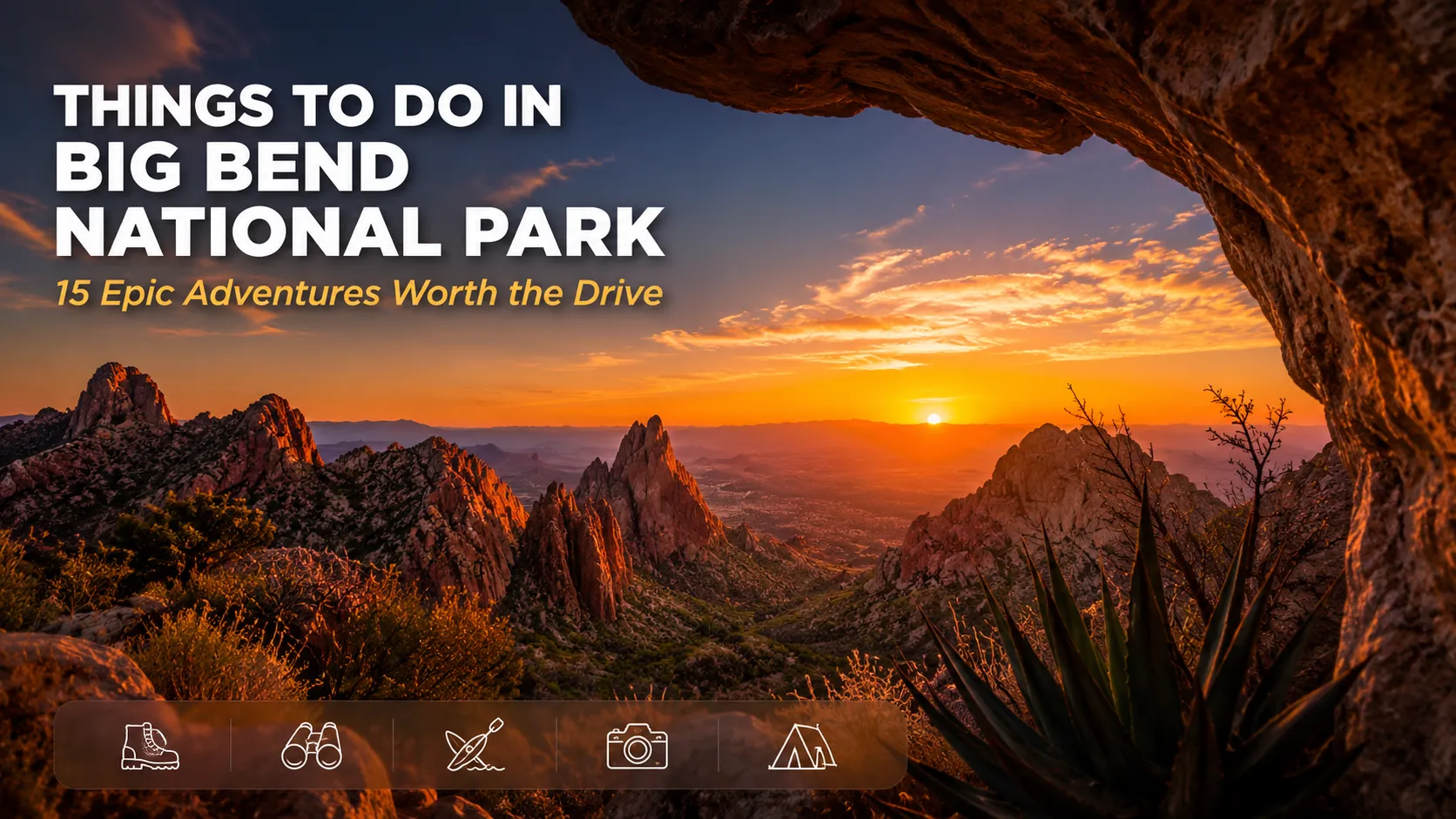
Big Bend National Park sits in a corner of Texas so remote that cell service practically requires a peace treaty. But that isolation is the whole point. If you are searching for things to do in Big Bend National Park, you are about to find slot canyons, natural hot springs, and some of the darkest night skies in America, all packed into 801,163 acres of Chihuahuan Desert. Grab your boots.
A Quick Introduction to Big Bend National Park
Established on June 12, 1944, Big Bend National Park covers more ground than the entire state of Rhode Island. Yet in 2025, only about 568,000 people visited, compared to roughly 5 million at Zion and 12 million at Great Smoky Mountains (Earth Trekkers). Translation: you can actually hear yourself think out here.
The park earned its International Dark Sky Park designation in 2012 and holds some of the darkest night skies in the lower 48 states. Add in the Chisos Mountains, the Chihuahuan Desert, and 118 miles of Rio Grande frontage, and this landscape refuses to be boring.
Before you go, it helps to browse Big Bend National Park images and recent trip reports, so you know what kind of terrain and weather to expect. For an idea of what other visitors packed and reviewed before their trip.
Best Big Bend Hikes for Every Skill Level
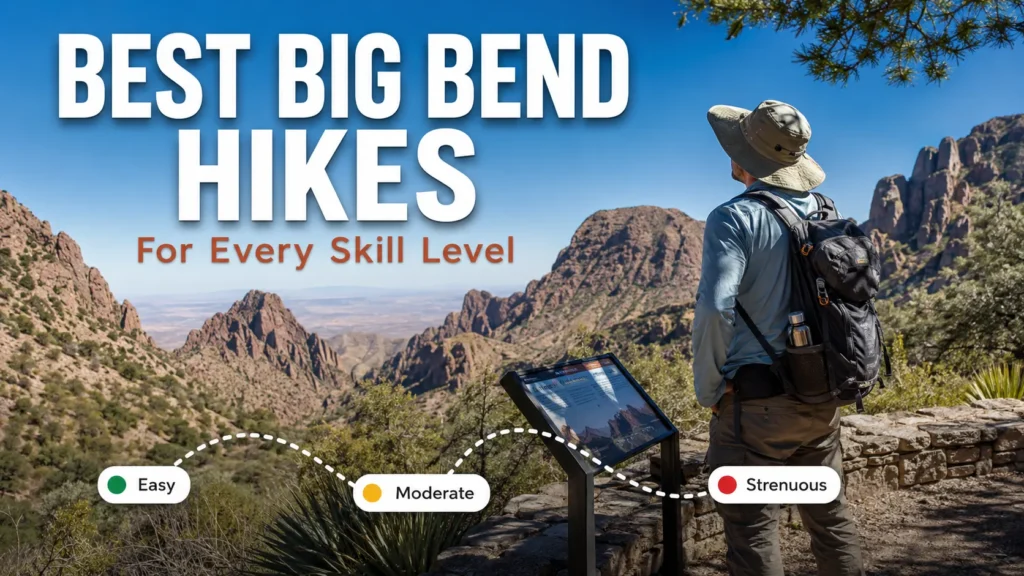
Big Bend hikes range from an easy stroll with a camera to a full-day climb that will make you question your life choices, and that range is a feature, not a flaw. Here are the three that repeat visitors mention the most.
Santa Elena Canyon Trail
This short, family-friendly trail leads to a dramatic canyon where limestone walls rise straight up from the Rio Grande. It is an easy win if you only have an hour to spare and still want a jaw-dropping photo.
The Window Trail
Starting from the Chisos Basin, this moderate trail funnels down toward a natural pour-off framed by canyon walls. Catch it near sunset, and the light show alone justifies the drive into the mountains.
South Rim Trail
For serious hikers, the South Rim delivers the best panoramic views in the park and doubles as one of the most rewarding routes for hiking Big Bend National Park Texas has to offer. Plan for a full day, plenty of water, and sturdy boots. Trail conditions change with the season, so cross-check current reports on AllTrails before you head out.
Cruise the Ross Maxwell Scenic Drive
This paved road threads through some of the park’s best geology, with pullouts, roadside displays, and overlooks along the way. Late afternoon drives catch the mountains lighting up in gold and orange, which is honestly better than most postcards.
Soak in the Historic Hot Springs
Along the Rio Grande sits a set of historic hot springs, first used by homesteaders in 1909. The short walk in leads to a warm, mineral-rich pool with river views, a strange but genuinely relaxing way to end a long hiking day.
Cross the Border at Boquillas del Carmen
At the official Boquillas Port of Entry, you can arrange a rowboat ride across the Rio Grande and a burro or truck ride into the small Mexican village of Boquillas del Carmen. Bring a passport for everyone in your group, and note that U.S. dollars are the accepted currency for lunch or souvenirs (NPS). It is one of the few legal, uncomplicated border crossings in the entire national park system.
Float or Paddle the Rio Grande
The Rio Grande borders the park for 118 miles, offering everything from a lazy half-day float to a multi-day canoe trip through Santa Elena and Boquillas Canyons. River trips require a backcountry permit, so plan ahead rather than showing up and hoping for the best.
Go Wildlife Watching and Birding
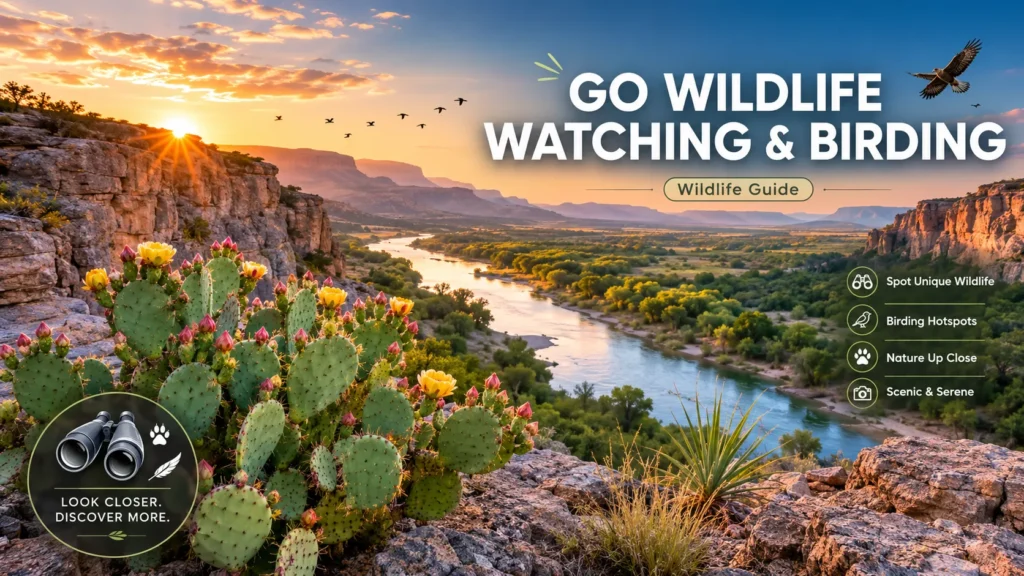
Big Bend is home to more than 450 bird species and over 200 types of butterflies, more than any other U.S. national park. Black bears, javelinas, and roadrunners round out the cast, so keep your camera ready and your snacks sealed.
Stargaze Under Some of America’s Darkest Skies
On a clear night, the Milky Way shows up with the naked eye, no filters or apps required. Bring a blanket, skip the flashlight glare, and let your eyes adjust for the full effect.
Camp Under the Chisos Mountains
Big Bend has four developed campgrounds plus primitive backcountry sites, but every single one of them requires an advance reservation through Recreation.gov. There is no first-come, first-served camping and no dispersed camping anywhere in the park, so booking ahead is non-negotiable.
Best Time to Visit Big Bend National Park
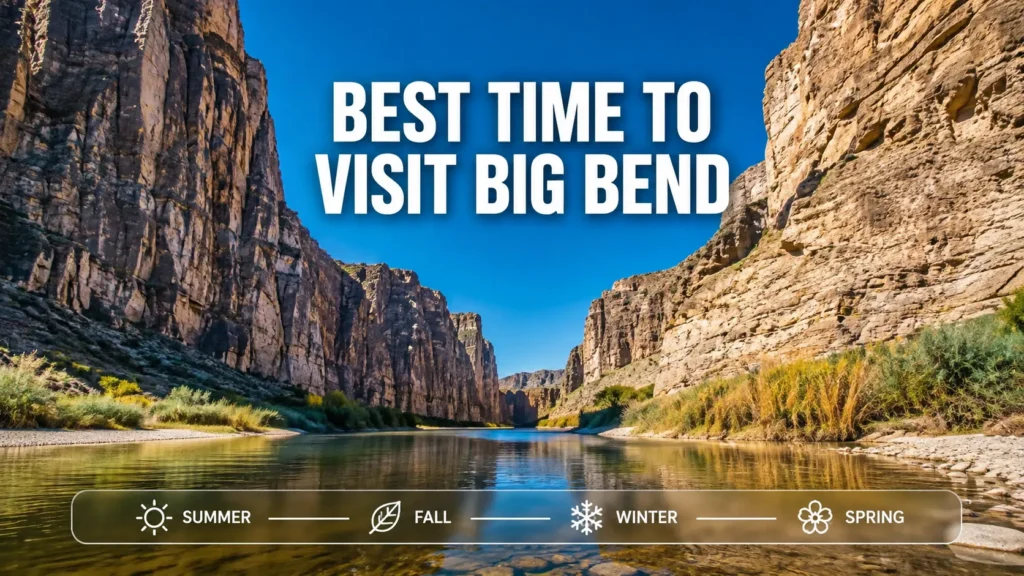
Fall and spring, roughly October through April, bring the most comfortable hiking weather. Summer temperatures regularly climb past 100°F in the desert lowlands, though the Chisos Basin stays noticeably cooler thanks to its elevation.
Practical Tips Before You Go
Cell service is scarce across most of the park, so download offline maps before you arrive. Pack at least one gallon of water per person per day, sturdy footwear, and layers, since desert temperatures swing hard between day and night.
Frequently Asked Questions About Big Bend National Park
What is the best time of year to visit Big Bend National Park?
Fall and spring, from October through April, bring cooler temperatures and comfortable hiking weather. Summer highs regularly top 100°F in the desert, so pack accordingly.
How many days do you need to see Big Bend National Park?
Plan for at least three to four days. That gives you enough time to hike a canyon, drive the Ross Maxwell Scenic Drive, soak in the hot springs, and stargaze.
What is the closest town to Big Bend National Park?
Terlingua, Texas, a former mining town turned quirky basecamp, sits just minutes from the park’s west entrance and offers lodging, food, and gear rentals.
How far is Big Bend from El Paso and San Antonio?
El Paso is roughly 325 to 330 miles away, about a 4.5 to 5-hour drive. San Antonio sits about 430 miles out, closer to 7 to 8 hours by car.
What is the most popular hike in Big Bend National Park?
The Window Trail and Santa Elena Canyon Trail top most visitors’ lists, while the South Rim Trail rewards serious hikers with the park’s best panoramic views.
Can you swim in the Rio Grande at Big Bend?
Wading near the hot springs is common, but the NPS advises against swimming due to unpredictable currents. The river also marks an international border, so stay on the U.S. side.
Is Big Bend National Park good for stargazing?
Absolutely. Big Bend became an International Dark Sky Park in 2012 and offers some of the darkest night skies in the continental United States.
Do you need a permit to hike or camp in Big Bend?
Day hiking needs no permit, but all backcountry camping, backpacking, and river trips require a Backcountry Use Permit from a visitor center or Recreation.gov.
What is the difference between Big Bend National Park and Big Bend Ranch State Park?
Big Bend National Park is federally run by the NPS, while neighboring Big Bend Ranch State Park is managed by Texas Parks and Wildlife, with separate fees and rules.
Is Big Bend National Park safe to visit near the Mexico border?
Yes. Big Bend sees very low crime, and the only legal border crossing is the staffed Boquillas Port of Entry, which welcomes day visitors carrying a passport.
What should I pack for a trip to Big Bend?
Bring layered clothing, sturdy hiking shoes, sunscreen, a wide-brim hat, at least one gallon of water per person daily, and a paper map, since cell service is scarce.
How to spend a day in Big Bend?
Start with sunrise at the Chisos Basin, hike the Window Trail, drive the Ross Maxwell Scenic Drive by afternoon, then end at Santa Elena Canyon for sunset.
Are there grizzly bears in Big Bend?
No. Big Bend has black bears, not grizzlies. Grizzly bears disappeared from Texas over a century ago, so store food properly but do not worry about grizzlies.
Why is Big Bend closing for 2 years?
Chisos Basin construction, funded by the Great American Outdoors Act, began in 2026 and will run about two years, causing partial access disruptions, not a full park closure.
What is the best month to go to Big Bend?
Many visitors pick November or March, when daytime highs stay mild, nights stay cool but comfortable, and desert wildflowers add extra scenery.
Final Thoughts
Big Bend rewards travelers who are willing to drive a little farther and plan a little more. Between the canyons, the hot springs, the border crossing, and the darkest skies in the lower 48, the things to do in Big Bend National Park could easily fill a week, not a weekend. For more Texas trip ideas, browse our destination guides before you hit the road.
This article contains affiliate links. If you purchase through our links, we may earn a commission at no extra cost to you. We only recommend products we genuinely believe in. Read our Affiliate Disclaimer for full details.