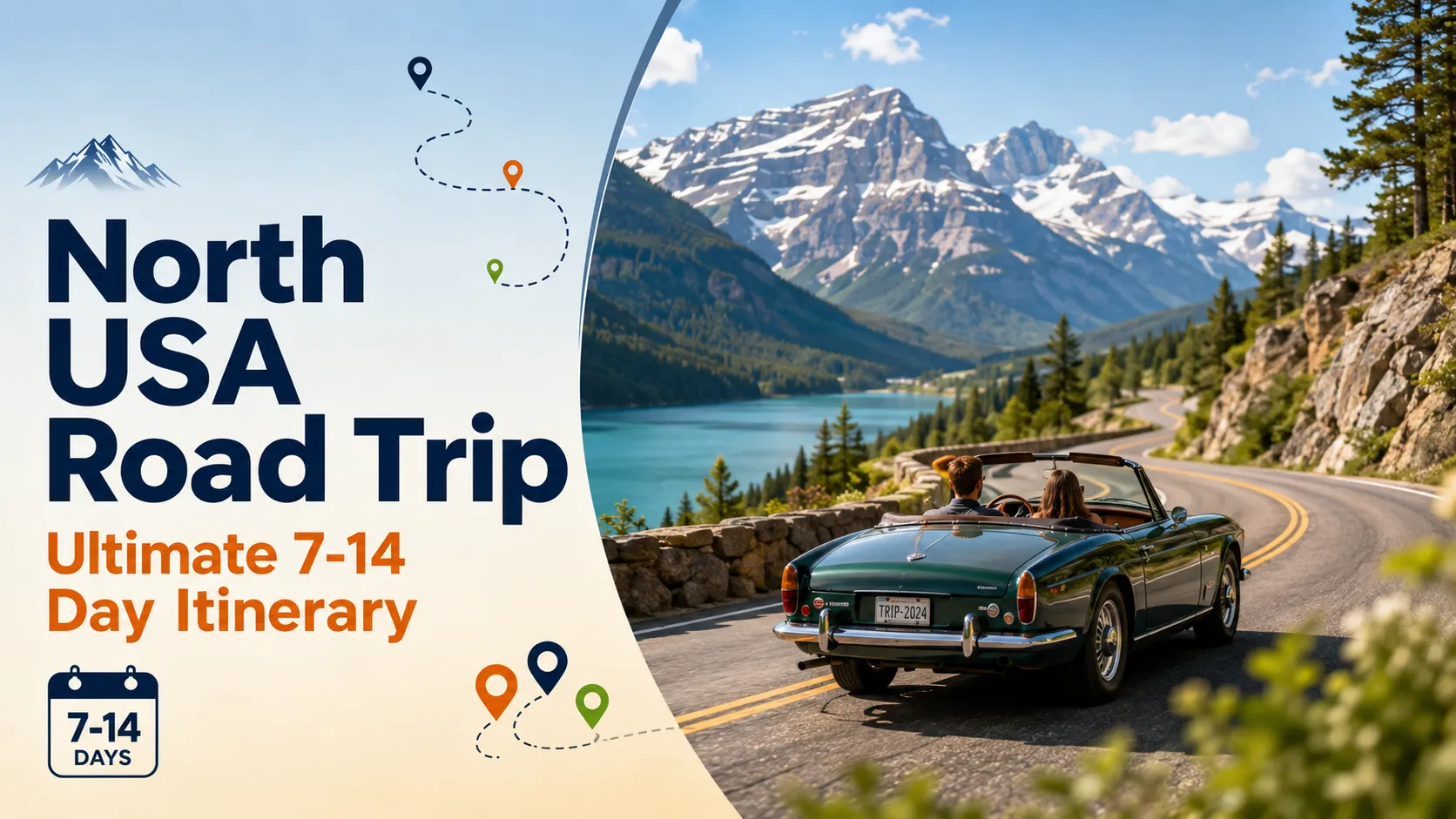
A North USA road trip follows U.S. Highway 2, the historic “Great Northern” route, linking North Cascades and Glacier National Parks, the Great Lakes shoreline, and Acadia National Park in Maine. A 7-day trip covers Seattle to Glacier (about 550 miles), a 10-day trip extends to the Great Lakes, and the full 14-day coast-to-coast route spans roughly 3,200 miles.
Table of Contents
If you’re planning a North USA road trip, you’re looking at one of the most underrated drives in the country: a northern-tier route that trades desert heat and interstate traffic for glacier-carved mountains, freshwater coastline, and small towns most travelers skip. This guide breaks the route into three realistic itineraries, a 7-day Pacific Northwest sampler, a 10-day version that pushes into the Great Lakes, and a full 14-day coast-to-coast crossing, so you can pick the one that fits your calendar.
Every driving time, entrance fee, and seasonal note below comes from official sources like the National Park Service, so you can plan with real numbers instead of guesswork. Whether you’re chasing Going-to-the-Sun Road in Glacier or the sea caves of Lake Superior, here’s exactly how to build your North USA road trip.
What Is the North USA Road Trip Route?
The North USA road trip generally follows U.S. Highway 2, nicknamed the Great Northern after the historic railroad that parallels it. The full route runs from the Pacific coast near Seattle, Washington, to the Atlantic coast in Maine, tracing the top of the country through Washington, Idaho, Montana, North Dakota, Minnesota, Wisconsin, Michigan, and into New England.
Unlike Route 66 or the Pacific Coast Highway, this route isn’t about one famous road. It’s a corridor of national parks, national lakeshores, and lake towns strung together across the northern states, with two of the country’s most dramatic mountain parks bookending the western half.
For a shorter trip, our guide to planning multi-day scenic drives has more tips on breaking a long route into manageable legs.
7 vs 10 vs 14 Days: Which Itinerary Fits You?
Here’s how the three itineraries compare at a glance, so you can match the trip to the time you actually have.
| Itinerary | Route | Approx. Distance | Best For |
| 7-Day | Seattle to Glacier National Park | ~550 miles one-way | First-timers, long weekends off work |
| 10-Day | Seattle to the Great Lakes (Duluth/Apostle Islands) | ~1,700 miles one-way | Travelers who want mountains and lakes |
| 14-Day | Seattle to Acadia National Park, Maine | ~3,200 miles one-way | Full coast-to-coast bucket-list trip |
7-Day North USA Road Trip Itinerary
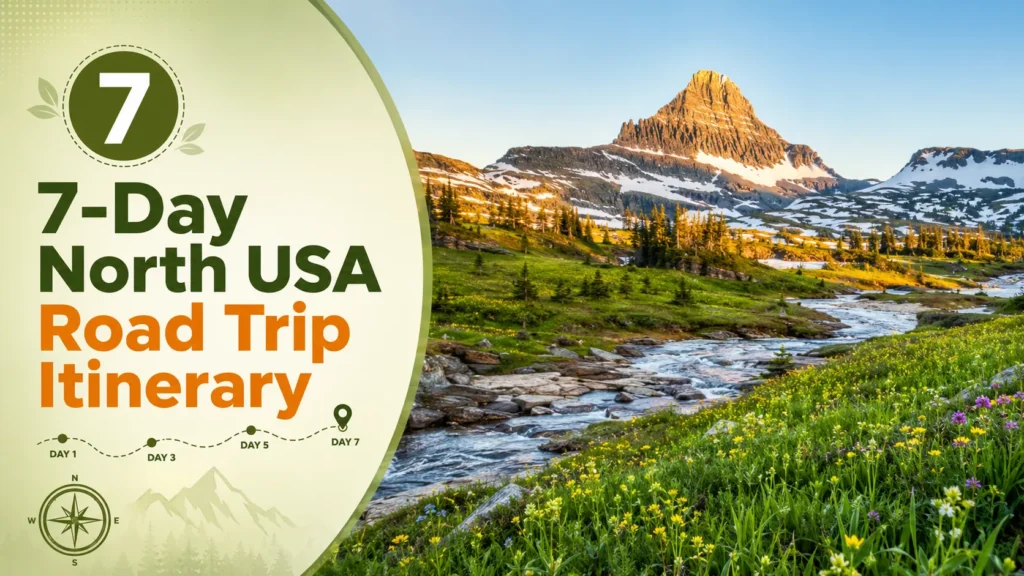
This version sticks to the Pacific Northwest and Northern Rockies, the two most scenic mountain ranges on the whole route. It works well as a fly-into-Seattle, fly-out-of-Kalispell trip, or as a there-and-back loop.
Day 1: Seattle to North Cascades National Park
Head east on State Route 20 into the North Cascades. This park has no entrance fee, making it an easy first stop. Overnight in Winthrop or Marblemount.
Day 2: North Cascades to Spokane
Continue east through the Methow Valley toward Spokane. Break up the drive with a stop at a scenic overlook or small-town diner along the way.
Day 3: Spokane to West Glacier, Montana
Cross into Idaho and Montana, with a stop at Coeur d’Alene Lake if time allows. This leg is part of the roughly 550-mile, 9-to-10-hour Seattle-to-Glacier drive most travelers split into two or three days.
Day 4: Glacier National Park: Going-to-the-Sun Road
Drive the full 50-mile length of this alpine road from West Glacier to St. Mary. No vehicle reservation was required in 2026, though rangers may temporarily close lots when they fill.
Day 5: Glacier National Park: Many Glacier or Two Medicine
Spend the day hiking or boating in one of the park’s quieter valleys, both known for wildlife sightings and fewer crowds than the main corridor.
Day 6: West Glacier to Kalispell
Wind down with a shorter driving day. Fly home from Glacier Park International Airport (FCA) or start the return drive.
Day 7: Return to Seattle or fly home
Buffer day for weather delays, extra hiking, or the drive back if you didn’t fly out.
10-Day North USA Road Trip Itinerary
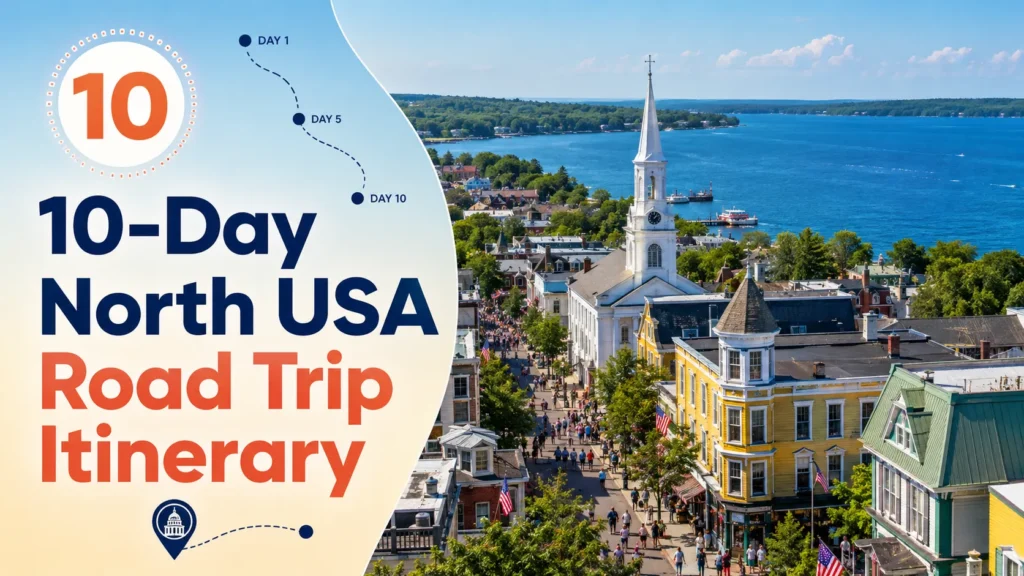
This itinerary keeps everything from the 7-day version, then pushes east from Glacier across the Northern Plains and into the Great Lakes region, ending among the sea caves and lighthouses of Lake Superior.
Days 1-6: Follow the 7-Day itinerary above
Seattle through Glacier National Park, as detailed in the section above.
Day 7: Glacier to Great Falls, Montana
Head east out of the mountains and onto the open plains of central Montana.
Day 8: Great Falls to Fargo, North Dakota
A long driving day across the Northern Plains. Break it up with a stop in a small Montana or North Dakota town for gas and lunch.
Day 9: Fargo to Minneapolis-St. Paul, Minnesota
Trade wide-open prairie for the Twin Cities, a good spot to restock supplies and enjoy a night in a real city.
Day 10: Minneapolis to Duluth and the Apostle Islands
Finish at Lake Superior. From Duluth, it’s a short drive to Bayfield, Wisconsin, the gateway to the Apostle Islands National Lakeshore and its famous sea caves and lighthouses.
Kayaking the mainland sea caves is one of the best ways to experience the lakeshore, and you can check prices here for guided paddling trips out of Bayfield before you go, since the National Park Service does not run its own guided tours.
14-Day North USA Road Trip Itinerary
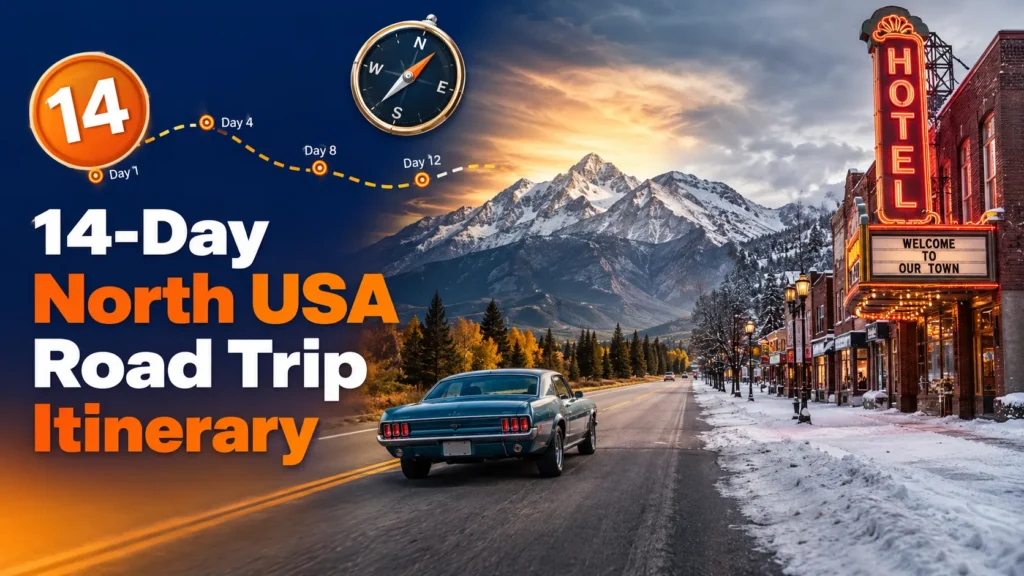
This is the full coast-to-coast crossing. It follows the same path as the 10-day version through the Great Lakes, then continues across Michigan and New England to finish at the Atlantic.
Days 1-10: Follow the 10-Day itinerary above
Seattle through Glacier National Park to Duluth and the Apostle Islands, as detailed above.
Day 11: Apostle Islands to Michigan’s Upper Peninsula
Cross into Michigan along the Lake Superior shoreline, then continue toward the Straits of Mackinac.
Day 12: Mackinac Island
Park your car on the mainland in St. Ignace or Mackinaw City and take the ferry over. No cars are allowed on Mackinac Island, so exploring by bike, foot, or horse-drawn carriage is part of the experience.
Day 13: Michigan to New York and New England
This is the longest driving stretch of the trip. Plan two full driving days here, breaking up the distance with an overnight around the Niagara Falls or Albany area.
Day 14: Boston to Acadia National Park, Maine
Finish the drive up the Maine coast to Bar Harbor and Acadia National Park, the traditional eastern endpoint of the Great Northern route.
A carriage road bike tour or lighthouse cruise is a relaxing way to close out the trip. Book this tour in advance during the busy July and August season, when Acadia’s parking lots fill early.
For more multi-week itinerary ideas, our travel planning guides cover how to structure long-distance trips without burning out halfway through.
Best Time to Go
Timing matters more on this route than most, since several key roads and passes close for winter.
| Season | What to Expect | Notes |
| Late June-Aug | All roads open, warmest weather, busiest crowds | Going-to-the-Sun Road typically opens fully by late June or early July |
| September | Fewer crowds, cooler nights, fall color starting | A strong pick for Glacier and the Great Lakes; some services start closing |
| Winter (Nov-Apr) | Going-to-the-Sun Road and North Cascades Highway (SR-20) close | Not recommended for the full route; regional winter trips only |
Always check current conditions before you leave. The National Park Service Glacier road status page and Washington State DOT’s mountain pass reports are the two most reliable sources for real-time closures.
Budget: What Does a North USA Road Trip Cost?
Park entrance fees are a small part of the budget, but they’re worth planning for since several parks on this route charge different rates.
| Park or Pass | 2026 Fee |
| Glacier National Park (private vehicle, 7 days) | $35 |
| North Cascades National Park | Free, no entrance fee |
| Acadia National Park (private vehicle, 7 days) | $35 |
| America the Beautiful Annual Pass (U.S. residents) | $80, covers all NPS entrance fees for a year |
If your trip touches three or more fee-charging parks, the America the Beautiful pass usually pays for itself. It’s also worth timing part of your trip around a 2026 fee-free day: February 16, May 25, June 14, July 3-5, August 25, September 17, October 27, or November 11. As of 2026, fee-free days apply to U.S. citizens and residents only.
Beyond entrance fees, budget for fuel (mountain and rural stretches burn more gas than highway driving), 2 to 3 nights of lodging per week if you’re not camping, and groceries for cooler snacks between towns, since gas stations thin out considerably on the Montana Highline and across North Dakota.
Family-Friendly Tips and Safety Considerations
- Glacier National Park is bear country. The National Park Service recommends carrying bear spray, knowing how to use it, and making noise on trails.
- Seat belts are a federal legal requirement inside Acadia National Park, the same as on any U.S. road.
- Cell service disappears for long stretches in the North Cascades and on rural sections of the Montana Highline. Download offline maps before you go.
- Kids under 16 don’t pay a per-person entrance fee at parks that charge by the person, though vehicle fees still apply.
- Pack layers no matter the month. Mountain weather at Logan Pass and in the North Cascades can swing 30+ degrees from the valley floor.
Parking and Practical Logistics
A few parking quirks are worth knowing before you arrive:
- Mackinac Island: No cars are allowed on the island at all. Park in a lot in St. Ignace or Mackinaw City and take the ferry over.
- Glacier’s Logan Pass: A three-hour parking limit runs from July 1 through September 7, 2026, to keep the small lot turning over during peak season.
- Apostle Islands, Meyers Beach: There’s a small parking fee at this popular sea cave kayak launch, plus a set of stairs down to the water.
- Arrive at Glacier before 8 a.m. or after 5 p.m. during July and August. Rangers close entrances temporarily once lots fill, and mornings avoid both the crowds and the heat.
Tours and Experiences Worth Booking
A few sections of this route genuinely benefit from a guided experience rather than winging it, especially if you want the Apostle Islands sea caves or Glacier’s backcountry without renting your own gear.
For Glacier National Park, a guided boat tour on Lake McDonald or a ranger-led hike takes the guesswork out of bear safety and trail navigation. Reserve your stay and activities early for July and August, when lodges inside and near the park sell out months ahead.
Near Mackinac Island, a horse-drawn carriage tour or bike rental is the only way to see the island’s interior, since cars aren’t an option. Check prices here before you go, especially if you’re traveling during a summer weekend.
Frequently Asked Questions
Q1. How many days do you need for a North USA road trip?
A focused Pacific Northwest sampler takes 7 days, a version that reaches the Great Lakes takes about 10 days, and the full coast-to-coast crossing from Seattle to Maine takes roughly 14 days.
Q2. What is the best time of year for a North USA road trip?
Late June through August offers the most reliable road access, since Going-to-the-Sun Road and other mountain passes are fully open. September brings smaller crowds and cooler weather but slightly reduced services.
Q3. Do I need a National Park pass for this route?
If you’re visiting three or more fee-charging parks, the $80 America the Beautiful annual pass is usually cheaper than paying each park’s individual entrance fee.
Q4. Is Going-to-the-Sun Road in Glacier open year-round?
No. The alpine section around Logan Pass typically opens in late June or early July and closes for the season in October or November, depending on snowfall.
Q5. Can I do this road trip without visiting Canada?
Yes. The route stays within the United States the entire way, though some travelers choose a short optional detour through Ontario near Sault Ste. Marie, which requires a valid passport.
Q6. Is North Cascades National Park free to enter?
Yes. North Cascades is one of the few U.S. national parks with no entrance fee, though adjacent U.S. Forest Service trailheads may require a separate Northwest Forest Pass.
Q7. What’s the best airport for the 7-day itinerary?
Fly into Seattle-Tacoma International Airport (SEA) and out of Glacier Park International Airport (FCA) in Kalispell, Montana, to avoid backtracking.
Q8. Is this route family-friendly?
Yes, with planning. Build in rest days at the national parks, pack layers for sudden weather changes, and expect long stretches with no cell service in the mountains.
Q9. How much does gas cost for a 14-day, 3,200-mile road trip?
Fuel costs depend on your vehicle’s mileage and current gas prices, which vary by state and season, so it’s worth checking current regional prices before budgeting a total.
Q10. Can I drive Mackinac Island’s roads?
No. Mackinac Island bans motor vehicles entirely. Visitors get around by bicycle, on foot, or by horse-drawn carriage after arriving by ferry.
Conclusion
A North USA road trip rewards travelers willing to trade the crowded interstates farther south for a quieter, cooler corridor of mountains, lakes, and small towns. Whether you have a single week for Glacier and the Cascades or two full weeks to cross the entire northern tier to Maine, the route breaks down into manageable legs with real national park anchors at each end.
Start with the itinerary that matches your calendar, check current road and fee conditions before you leave, and build in buffer days for the mountain passes. The northern states have been quietly delivering some of the best scenery in the country long before they showed up on everyone else’s road trip list.
This article contains affiliate links. If you purchase through our links, we may earn a commission at no extra cost to you. We only recommend products we genuinely believe in. Read our Affiliate Disclaimer for full details.