ChatGPT iMessage control is a new OpenAI feature for the ChatGPT Mac app that lets the AI read, write, search, and send iMessage, SMS, and RCS texts on a user’s behalf. OpenAI launched it Thursday, August 20, 2026, for ChatGPT Work and Codex subscribers. It runs locally, requires explicit permissions, and has already raised fresh Apple privacy concerns.
Table of Contents
OpenAI’s new ChatGPT iMessage control feature works only on Mac computers right now, and it needs several rounds of user approval before it can touch a single message. The company built it using Apple’s own AppleScript and Accessibility tools rather than a hidden backdoor, and it says the plugin does not keep a permanent index of anyone’s texts. Still, the timing could not be more awkward, since Apple sued OpenAI just last month.
What OpenAI Just Launched
OpenAI rolled out the OpenAI Messages plugin on Thursday, giving the ChatGPT Mac app the ability to interact directly with Apple’s Messages application. Bloomberg first reported that the update lets ChatGPT take actions such as reading, writing, and sending text messages, along with searching conversations and pulling summaries from them.
According to Engadget, the feature currently works across iMessage, SMS, and RCS threads, and OpenAI’s own demo shows a user asking ChatGPT to catch up on missed conversations before drafting and sending a reply, all without opening the Messages app directly.
How ChatGPT’s iMessage Control Actually Works
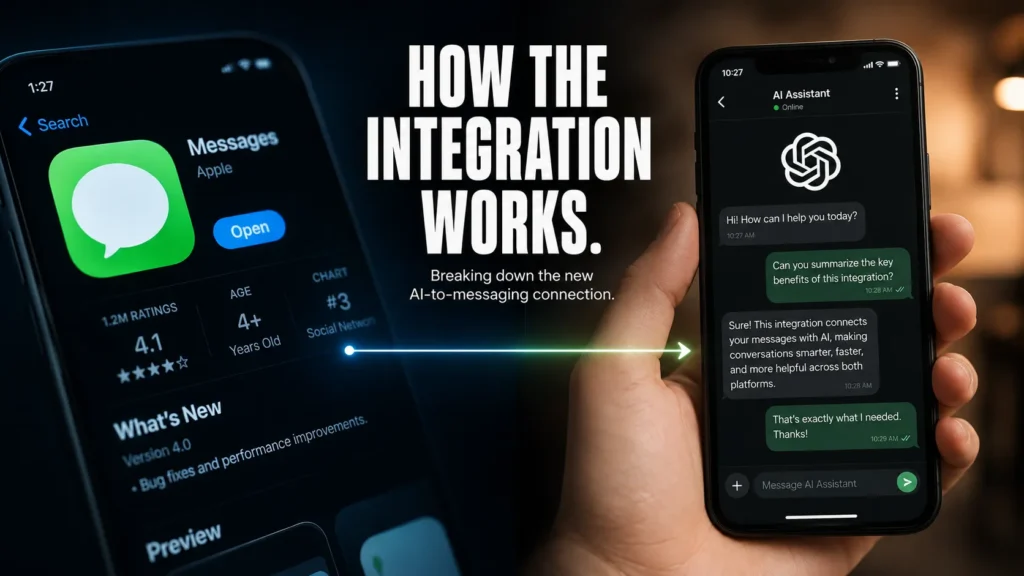
The feature runs locally on the Mac rather than uploading a full message archive to OpenAI’s servers. It leans on macOS tools that have existed for years, which is part of why OpenAI describes it as compliant with Apple’s own automation framework rather than a workaround.
Permissions You Must Grant
Setting up ChatGPT iMessage control is not a single click. Multiple opt-in screens appear across both ChatGPT and macOS before the plugin can do anything.
| Action ChatGPT Can Take | Permission Required First |
| Read on-device message history | On-device history access prompt in ChatGPT |
| Search and summarize conversations | Full Disk Access in Mac System Settings |
| Draft and send new texts | Automation and Contacts permissions |
| Work across iMessage, SMS, and RCS | Accessibility permissions via AppleScript |
By default, ChatGPT asks for individual confirmation before sending each outgoing text. Users can turn that confirmation off for faster, hands-free messaging, though OpenAI reportedly discourages leaving that setting on permanently.
Reading, Writing, and Sending Texts
Once permissions are granted, the ChatGPT read write send texts function behaves similarly to asking a human assistant to check your phone. Ask it what you missed in a group chat, and it searches, summarizes, and can draft a reply in your own voice. VentureBurn reports that the underlying message database itself remains end-to-end encrypted, even while ChatGPT reads it locally on the device.
Who Can Use the New OpenAI Messages Plugin Right Now

Access is limited for now. The OpenAI Messages plugin currently works only for ChatGPT Work and Codex subscribers using the Mac desktop app, not the free or Plus consumer tiers. That narrow rollout suggests OpenAI wants real-world feedback before expanding ChatGPT iMessage control more broadly.
If you’re weighing whether a Mac upgrade makes sense before trying features like this, it is worth noting that RAM prices have jumped sharply this year, which is pushing up the cost of new machines across the board.
Apple Privacy Concerns Explained
Apple has built its entire brand around protecting message privacy, so a third-party AI reading and sending iMessages directly challenges that promise. Multiple outlets note this is exactly the kind of integration Apple has resisted in the past.
Full Disk Access: More Than Just Messages
The Full Disk Access permission required for this feature technically opens the door to more than text messages. VentureBurn notes that this same macOS permission can also expose Safari browsing logs, Mail records, and local backups, even though OpenAI says its plugin only interacts with the Messages app.
Why This Puts Apple in an Awkward Spot
As Business Standard reports, Apple has previously blocked third-party apps from bridging into iMessage, most notably shutting down the Beeper Mini app in 2024. Apple representatives did not immediately respond to requests for comment on the new ChatGPT integration.
Pros and Cons of Turning It On
- Pro: Saves time triaging long group chats and missed conversations
- Pro: Runs locally and does not build a permanent searchable index
- Pro: Requires layered, explicit user consent before activation
- Con: Full Disk Access grants broader system reach than messages alone
- Con: Currently limited to ChatGPT Work and Codex subscribers
- Con: Adds a new avenue for prompt injection or account compromise
The Bigger Picture: Apple and OpenAI’s Rocky Relationship
This launch lands during a genuinely tense stretch between the two companies. Apple sued OpenAI in July, accusing it of trade secret theft, and Gizmodo notes that Apple’s history of shutting down unofficial iMessage bridges makes its next move hard to predict here.
Security researchers are watching a different angle too. Just as the ToxicPanda 2.0 Android banking trojan shows how automation tools can be turned against users on Android, giving any AI broad control over a messaging app naturally raises questions about what happens if that access is ever abused or exploited.
None of this is happening in a vacuum. Big platform deals keep reshaping how people communicate and consume content, from streaming to messaging, and even recent YouTube creator agreements with Netflix show how quickly major tech players are redrawing old boundaries this year.
Frequently Asked Questions
What is ChatGPT iMessage control?
It is a new OpenAI feature that lets ChatGPT on Mac read, write, search, and send iMessage, SMS, and RCS text messages with a user’s permission.
When did OpenAI launch the ChatGPT Mac app iMessage feature?
OpenAI rolled it out on Thursday, August 20, 2026, according to Bloomberg’s initial report on the update.
Who can use the OpenAI Messages plugin?
Right now, it is limited to ChatGPT Work and Codex subscribers using the ChatGPT desktop app on Mac computers.
Does ChatGPT store a copy of my messages?
OpenAI says the plugin runs locally and does not create a permanent index of message history, though it does require Full Disk Access to function.
Why are there Apple privacy concerns about this feature?
Apple has built its brand around message privacy and has previously blocked third-party apps from bridging into iMessage, making an AI with read-and-send access notable.
Can ChatGPT send texts without my approval?
By default, no. ChatGPT asks for confirmation before sending each message, though users can disable that step for faster, hands-free use.
Does this work on iPhone as well as Mac?
No. The feature is currently exclusive to the ChatGPT desktop app on Mac and does not extend to iPhone or iPad versions of ChatGPT.
Has Apple responded to the new integration?
Apple has not issued a public statement, and representatives did not immediately respond to media requests for comment.
The Bottom Line
ChatGPT iMessage control is a genuinely useful idea wrapped in a genuinely complicated moment. It can save real time on message triage, and OpenAI built real consent steps into the rollout. But between the Full Disk Access requirement and Apple’s active lawsuit against OpenAI, this is one Mac feature worth turning on carefully, not automatically.