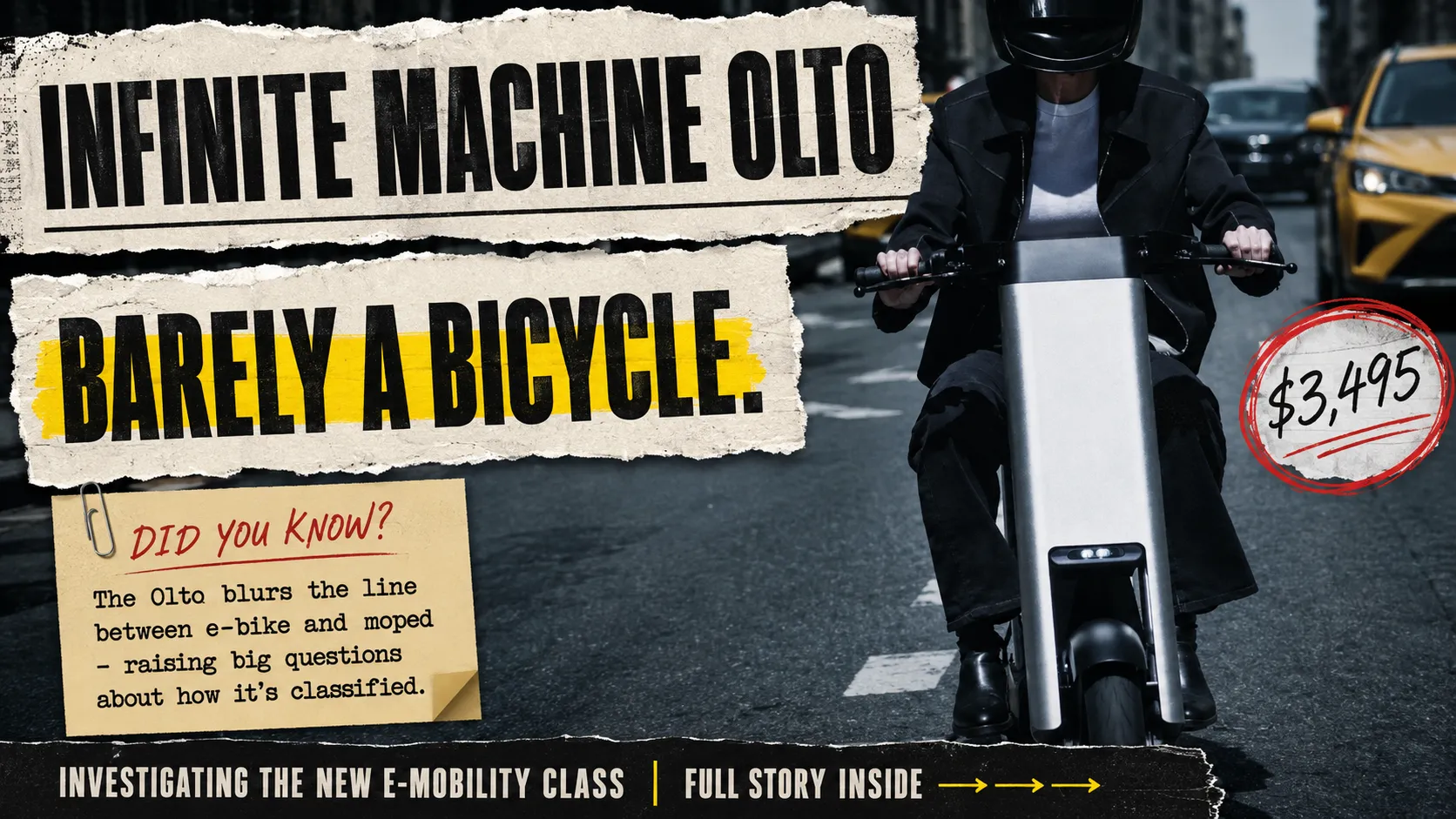
Infinite Machine Olto is barely a bicycle, and honestly, the company barely disagrees. It has pedals, sure, technically. But reviewers who’ve actually ridden the $3,495 Class 2 e-bike keep landing on the same verdict: this thing behaves like a moped wearing a bicycle costume. Here’s what the specs, the security tech, and the real-world reviews actually say.
Table of Contents
What Is the Infinite Machine Olto?
Olto Infinite Machine is the flagship e-bike from Infinite Machine, a Brooklyn-based startup founded by Joseph Cohen and Eddie Cohen and backed by venture firm a16z. It launched as a Class 2 e-bike, meaning no license, insurance, or registration required in most US states, and it’s now shipping after debuting in 2025.
Why Reviewers Say Infinite Machine Olto Is Barely a Bicycle
Multiple outlets have landed on nearly identical conclusions. Fortune described riding it as feeling “more like a moped” than a bicycle, noting its 176-pound frame and moped-style seating position. Electrek called it “unlike anything else currently on the market,” pointing out the pedals exist mostly for legal compliance rather than actual pedaling.
One detail says it all: on the review unit Fortune tested, the chain had gone rusty and was covered by a plastic guard that made it nearly impossible to service, a clear sign nobody expects riders to actually pedal this thing regularly. Infinite Machine Olto is barely a bicycle by design, not by accident.
Infinite Machine Olto Top Speed: How Fast Does Olto Really Go?
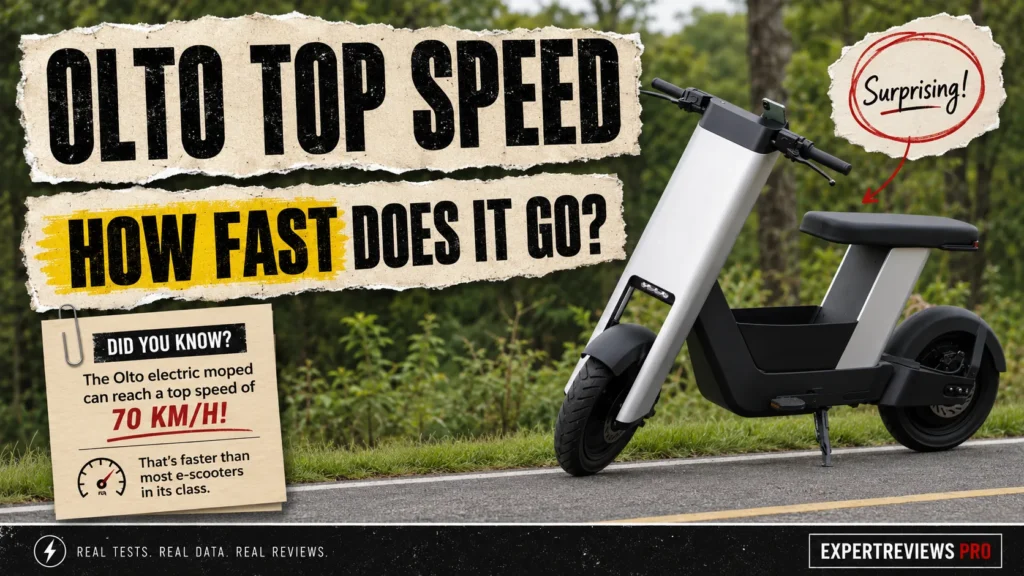
In its default, bike-lane-legal Class 2 mode, Infinite Machine Olto Top Speed caps at 20 mph through a software limiter tied to the Infinite Machine app. Riders in regions with looser rules can unlock higher performance, with reports citing speeds up to 33 to 36 mph once the limiter comes off, powered by a 750W motor that peaks around 2kW.
That speed range matters because it’s the whole reason critics question the “bicycle” label. A regular pedal bike rarely tops 20 mph on flat ground without serious effort, while Olto reaches that speed sitting still on a throttle. Unlocking the higher speed mode may also affect which legal class the vehicle falls under, depending on your state.
Infinite Machine Olto Design and Security: What Makes It Different
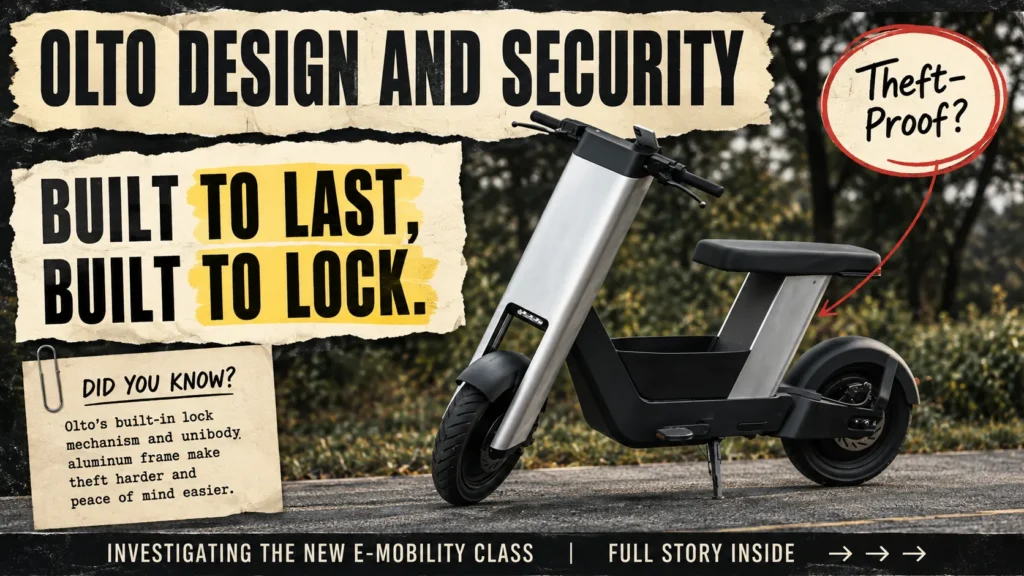
Infinite Machine Olto Design and Security leans hard into automotive thinking. The bike ships with front and rear suspension, hydraulic disc brakes reviewers compare to motorbike brakes, integrated turn signals, a headlight with high and low beams, and a 4.3-inch dashboard display built into the handlebars.
Security is arguably where Olto pulls furthest from bicycle territory. Infinite Machine calls it Infinite Security®: NFC and app-based unlocking, an onboard alarm with automatic motor immobilization, always-on GPS tracking through a built-in cellular Internet Module, and a motorcycle-grade automatic steering lock that engages the moment you walk away.
A 12-volt backup battery keeps the alarm and GPS running for weeks even if the main battery is removed and charging indoors. That’s a genuinely unusual amount of anti-theft engineering for something legally classified as a bicycle, and it fits a pattern of venture-backed startups betting big on category-blurring products. ExpertReviewsPro’s coverage of the Marc Benioff-backed startup June shows a similar dynamic, where big-name investors chase products that don’t fit neatly into an existing category.
Infinite Machine Olto Price: What You’re Actually Paying For
Infinite Machine Olto price starts at $3,495, or roughly $175 a month through financing, according to the company’s own site. That’s steep next to a typical commuter e-bike, but it’s also priced well under a moped or scooter with comparable range and speed, which is exactly the gap Infinite Machine is targeting.
The base price doesn’t include extras. A kid carrier runs $498, a rear cargo basket adds $98, and a simple phone mount costs $28. Given the accessory lineup, a fully loaded Olto can push well past $4,000 before tax, delivery, or the optional charging dock.
35-Mile Range and a Battery Built for Apartments
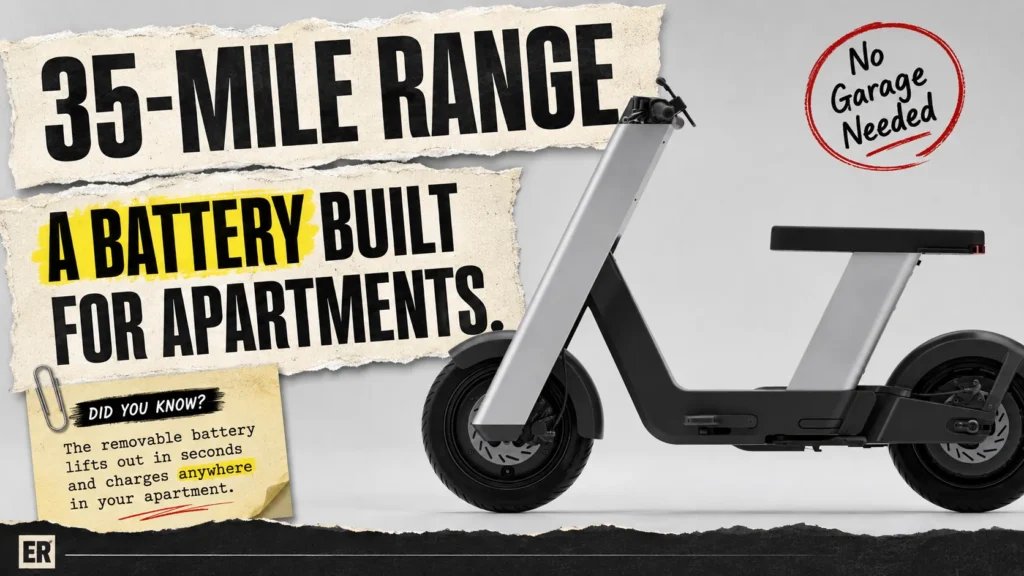
Olto’s removable 48V, 1.2kWh battery delivers a rated 35-mile range and slides out from under the seat without tools, a deliberate design choice for apartment dwellers who can’t drag a 175-pound vehicle indoors. Both the vehicle and battery carry UL 2849 and UL 2271 certifications, addressing the fire-safety concerns that have plagued cheaper e-bike batteries in recent years.
Is Infinite Machine Olto Actually a Bicycle, Legally?
Legally, yes, at least in states that recognize Class 2 e-bikes. Olto meets the technical definition: pedals present, 750W motor, 20 mph throttle-assisted top speed. Whether it feels like a bicycle in practice is an entirely different question, and it’s the exact tension every reviewer keeps circling back to.
The Bottom Line
Infinite Machine Olto is barely a bicycle in every meaningful sense except the legal one, and that’s kind of the point. It’s a $3,495 automotive-grade urban vehicle wearing bike-lane paperwork, built for people who want moped-level capability without the registration hassle. Check Infinite Machine’s official tech specs page for the full breakdown before deciding if that trade-off works for you. ExpertReviewsPro’s latest news section covers more emerging transportation and gadget stories like this one.
Frequently Asked Questions
How much is the olto bike?
The Infinite Machine Olto starts at $3,495, or about $175 a month through financing. Accessories like the kid carrier, rear basket, and phone mount cost extra.
Can I use an ebike like a regular bike?
Yes, though it depends on the model. Many e-bikes include functional pedals for pedal-assist riding, though some, like the Olto, are designed mainly for throttle use.
Is a bicycle a machine or not?
Yes, technically. A bicycle is a simple machine made of levers, wheels, and gears that convert pedaling force into forward motion, even without any motor or electronics involved.
Which is better, an electric cycle or a normal cycle?
It depends on your needs. Electric cycles offer speed and less physical effort, while normal cycles cost less, need no charging, and typically weigh far less to handle.
Which EV bike has 200 km range?
Range varies widely by battery size and riding conditions. Most consumer e-bikes, including the Olto’s 35-mile range, fall well short of 200 km; that’s more typical of electric motorcycles.
What is a jolt bike?
“Jolt” isn’t an official term Infinite Machine uses for the Olto. It may refer informally to electric bikes with sudden throttle acceleration, a trait some riders notice on powerful e-bikes.
What are the disadvantages of an electric cycle?
Common downsides include higher upfront cost, added weight from the battery and motor, charging requirements, and battery degradation over time, along with generally higher maintenance costs.
Which is the fastest electric cycle?
Top speeds vary by class and region. Class 3 e-bikes can reach 28 mph, while unlocked or off-road modes on some models, including reported Olto configurations, can exceed 30 mph.
What to avoid when buying an electric bike?
Avoid bikes without proper battery safety certification, unclear warranty terms, or motors that don’t match your local legal class limits, since that can create registration or insurance issues.
Is an electric bike healthy?
Yes, in pedal-assist mode. E-bikes still provide cardiovascular benefits, especially on models where riders pedal regularly, though throttle-only riding offers little more exercise than driving a scooter.
What is the danger of electric bike batteries?
Poorly certified batteries can overheat or catch fire, particularly with damaged cells or cheap chargers. Look for UL 2271 battery certification, which the Olto’s battery carries, for safer performance.
How to increase the speed of an electric cycle?
Some e-bikes offer app-based unlocking of higher speed modes, like Olto’s unrestricted setting. Modifying motor limits without manufacturer support can violate local laws and void your warranty.
What is the maximum speed of an electric bicycle?
It depends on classification. Class 1 and 2 e-bikes typically cap at 20 mph, Class 3 reaches 28 mph, and unlocked modes on some models can push past 30 mph.