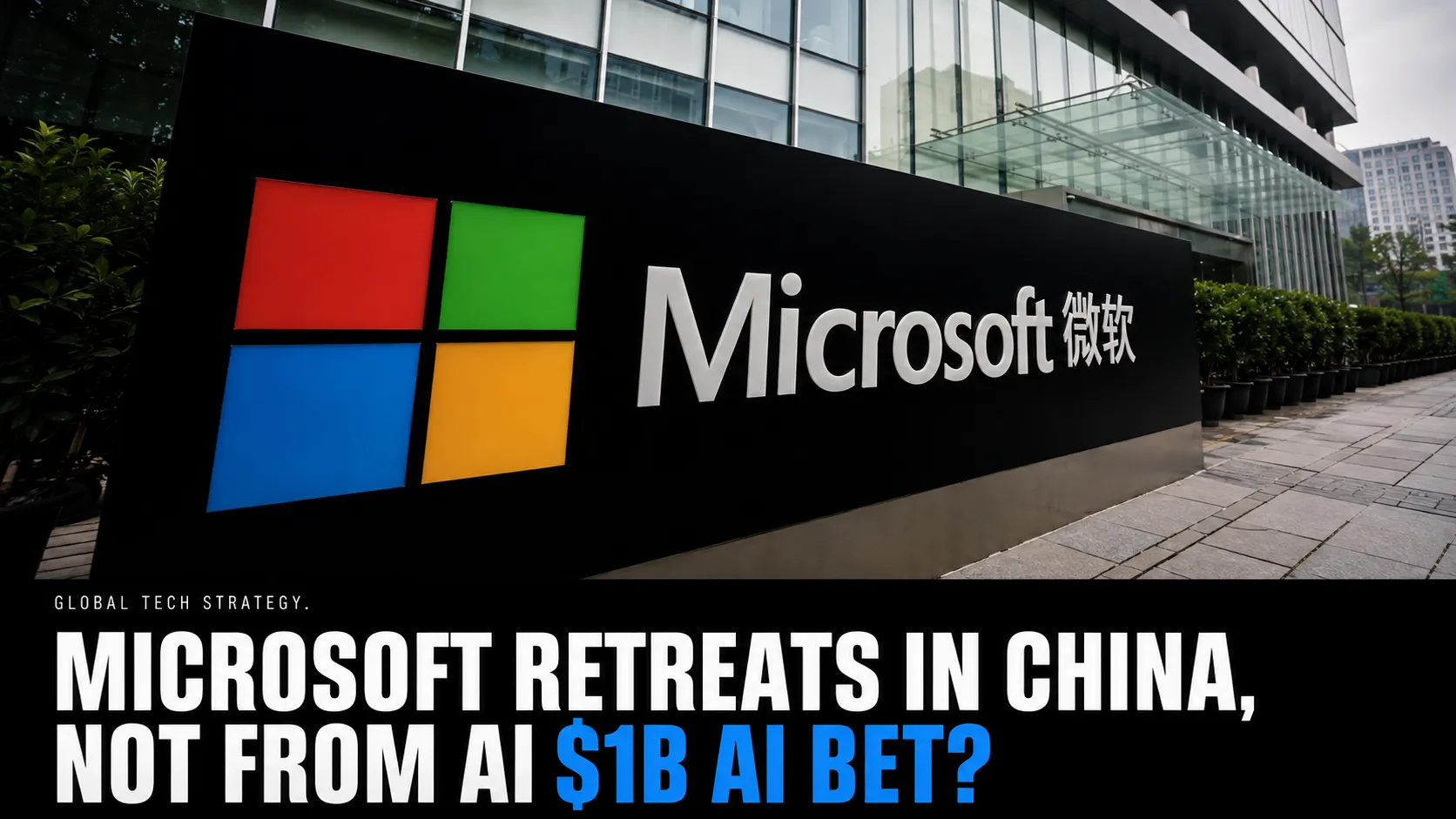
Microsoft retreats in China again this year, cutting cloud jobs and shutting down a flagship AI lab as regulatory pressure builds on both sides of the Pacific. Yet the story is not a full exit. While Microsoft scales back physical infrastructure, its AI business inside China keeps growing, fueled by Chinese companies eager to buy access to OpenAI’s models through Azure. Call it a strategic retreat with the back door left unlocked.
Table of Contents
What Microsoft Just Cut in China
Microsoft laid off between 200 and 400 employees from its Azure China unit in June, according to the South China Morning Post. Staff learned their roles would end on July 6, with severance based on tenure, plus up to seven months of extra pay. It marks the third round of China downsizing in under two years, a pattern that looks less like a one-time cut and more like a steady wind-down.
The Shanghai Lab That Quietly Closed
Earlier in 2026, Microsoft shut its IoT and AI Insider Lab in Shanghai’s Zhangjiang tech hub. Launched in 2019, the lab had helped more than 50 companies raise 9.4 billion yuan in funding by its fifth anniversary and trained close to 10,000 professionals. Its quiet closure fits the broader pattern of Microsoft retreating in China from physical, on-the-ground operations.
Corporate pullbacks like this rarely make headlines the way product launches do. For a different kind of company news this year, see our coverage of the Apple iPhone 18 Pro Max release rumors.
Why the AI Business Isn’t Leaving
Here is the twist. Even as Microsoft retreats in China on cloud jobs and lab space, the company’s AI teams in Shanghai and Suzhou were specifically spared from the June layoffs, according to TheStreet. Washington’s export controls limit which Nvidia chips Microsoft can run in China, so the company leans on selling access to AI models instead of building out full-scale infrastructure there.
ByteDance and the Billion-Dollar Exception

Microsoft sells OpenAI’s models to established Chinese firms through Azure, and ByteDance has become its biggest AI customer, spending more than $1 billion a year, according to Bloomberg. Ant Group, Meituan, and Tencent also buy AI access through the same channel. China still made up only about 1.5 percent of Microsoft’s overall revenue in 2024, but the AI slice of that business keeps climbing.
Curious how other tech companies are navigating shifting global markets right now? Our recent piece on Google Search Console’s new social profile feature shows a very different kind of adjustment.
Frequently Asked Questions
Is Microsoft leaving China completely?
No. Microsoft is scaling back cloud jobs, physical retail, and some lab operations in China, but it continues selling AI model access to major Chinese companies through Azure.
How many jobs did Microsoft cut in China recently?
Microsoft laid off between 200 and 400 Azure China employees in June 2026, with affected staff departing July 6 and receiving severance based on tenure.
Why is Microsoft cutting jobs in China?
The cuts reflect tightening data regulations in both the US and China, along with export controls limiting which AI chips Microsoft can deploy inside the country.
What was the Shanghai AI lab Microsoft closed?
Microsoft’s IoT and AI Insider Lab in Shanghai’s Zhangjiang hub, launched in 2019, closed quietly in early 2026 after helping over 50 companies raise significant funding.
Is Microsoft’s AI business in China still growing?
Yes. Microsoft continues selling OpenAI model access to Chinese firms through Azure, with AI revenue in China rising even as infrastructure jobs shrink.
Which Chinese company spends the most on Microsoft AI services?
ByteDance is reportedly Microsoft’s biggest AI customer in China, spending more than $1 billion a year on Azure and AI services, according to Bloomberg.
Why does Microsoft still sell AI models in China?
Selling model access requires less physical infrastructure than running full cloud operations, letting Microsoft earn revenue while limiting regulatory and hardware exposure.
How much of Microsoft’s revenue comes from China?
China accounted for roughly 1.5 percent of Microsoft’s overall revenue in 2024, a small but closely watched slice of its global business.
Are Microsoft’s AI research teams in China affected by the layoffs?
No. Microsoft’s AI teams in Shanghai and Suzhou were specifically excluded from the June 2026 layoffs, which targeted cloud infrastructure roles instead.
What US restrictions affect Microsoft’s China operations?
Washington’s export controls limit which advanced Nvidia AI chips Microsoft can deploy in China, reducing the value of building out full Azure infrastructure there.
The Bottom Line
Microsoft retreats in China on the ground, cutting jobs, closing labs, and shrinking its retail footprint. But it is not walking away from the money. By selling AI model access instead of running full China-based infrastructure, Microsoft keeps a foothold in one of the world’s largest tech markets, without the regulatory headaches that come with building there directly.